
Clancy Quay Heritage Trail
Introduction
Once a military barracks, this residential development includes 12 protected historic buildings. Founded in 1797 as Islandbridge Barracks, it was home to the British Army until 1922, when it was handed over to the Irish National Army. Its name was later changed to Clancy Barracks. Until it closed in 2001, the barracks was home to the Irish Defence Forces’ Ordnance Corps, Engineer Corps, and Supply and Transport Corps.
The early years
Islandbridge Barracks was established in 1797 by the Ordnance Board, who had previously been based in Chapelizod in Dublin. The Board was a semi-autonomous branch of the army. It had its own command and finances and was responsible for the Royal Irish Artillery. The move to a purpose-built barracks at Islandbridge was in response to Britain being at war with France and under direct attack. French forces attempted invasions in Wales in 1797 and in Ireland in 1798. In 1803 the barracks itself and its guns were one of the targets of Robert Emmet’s rebellion, although a direct attack on the barracks failed to materialise.
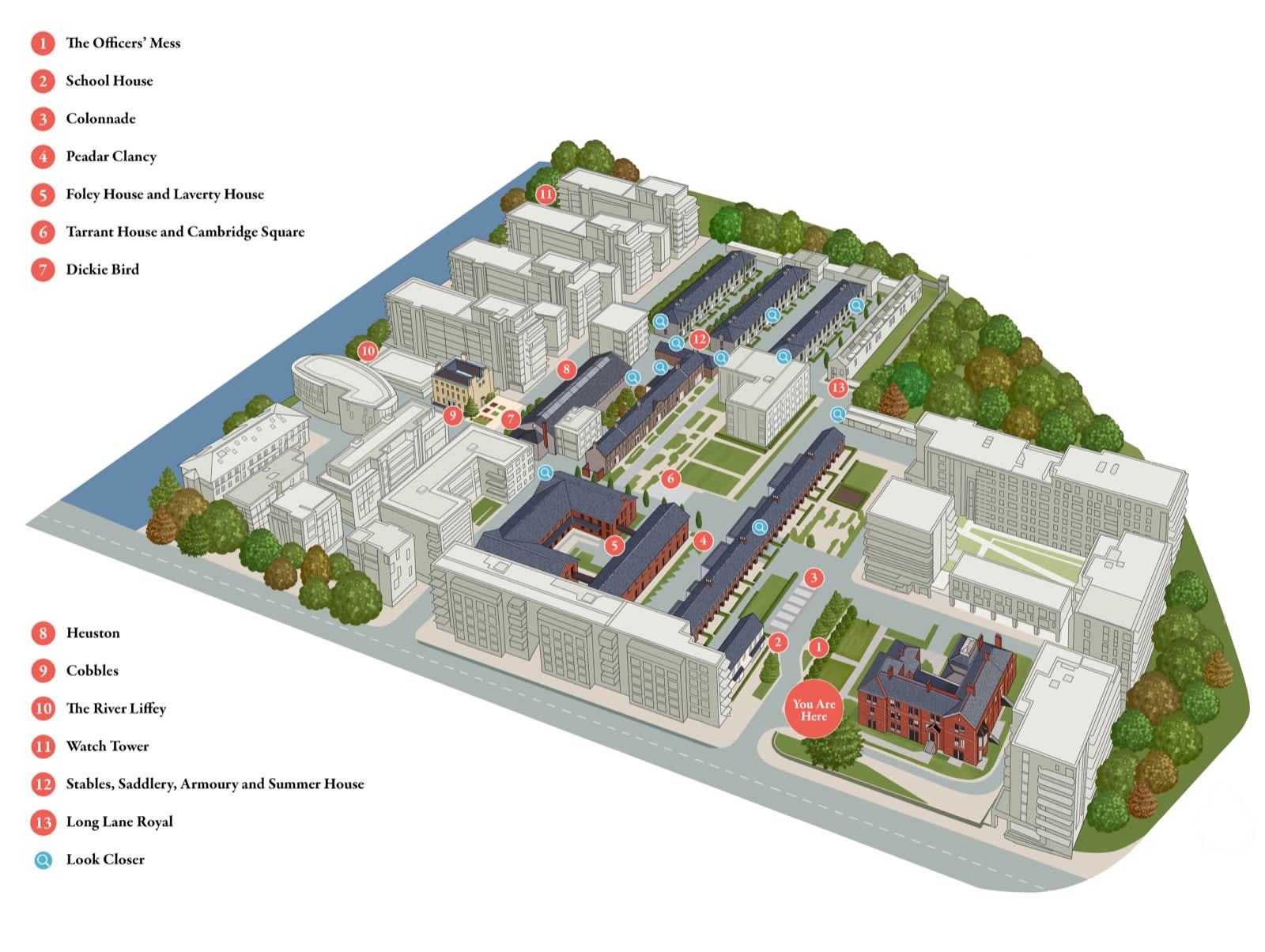
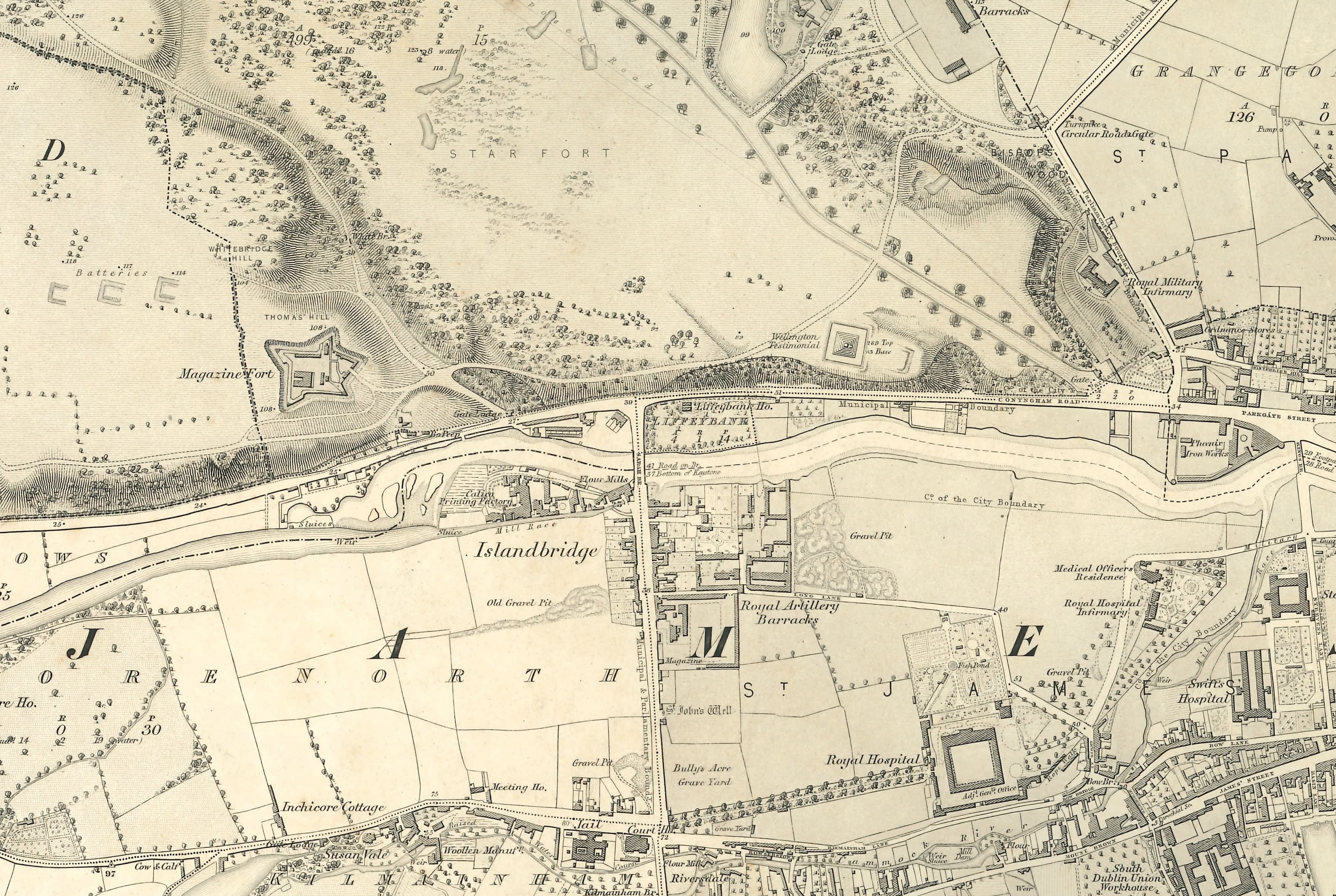
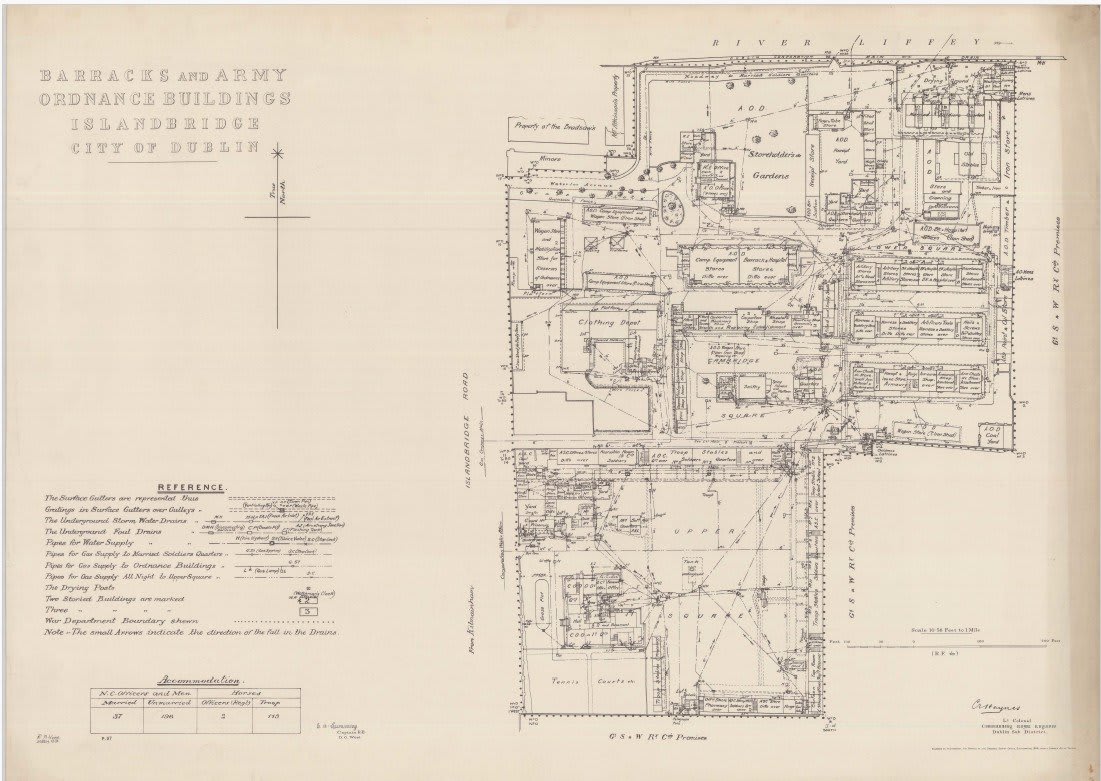
The Islandbridge Barracks was formed of new buildings, some of which survive, such as Colonnade and Tarrant House, as well as the adaptation of existing buildings. The site was divided in two by an east-west running road, Long Lane Royal. Until the building of the railways in the 1840s, this was a public road. The area to the south of the road was the main barracks, where the Officers’ Mess and Parade Square are today, and included barrack blocks and a large parade ground, called Upper Square. This was where the Royal Artillery were lodged. The area to the north of Long Lane Royal, running up to the Liffey, developed in a more piecemeal fashion, with parts of it remaining in private ownership until the 1890s. This northern half was home to the ordnance workshops and stores and, eventually included Lower Square and Cambridge Square.
(With the permission of the Board of Trinity College Dublin)
Uncertainty and consolidation
In the century following its foundation, the barracks expanded, contracted and expanded again, in response to defence requirements. As early as 1812 there were discussions about relocating it. In the 1830s it was proposed to move the ordnance and artillery depots to the Royal Hospital Kilmainham and parts of the barracks were leased to civilians. By 1840 the buildings where Stables, Saddlery and Armoury now stand were leased to the Poor Law Commissioners as a ‘lunatic asylum’ for Dublin’s poor.
Then in the 1860s, probably on the back of the Crimean War of 1853-56 and the Indian Rebellion of 1857, there was a flurry of investment and building activity. Islandbridge became a remount depot, a centre for the supply and stabling of horses for the armed services, and also a home for various cavalry regiments, as well as continuing as a centre for ordnance.
Its cavalry barracks’ role ended in 1896 when there was a serious outbreak of typhoid and the barracks was temporarily closed. There were discussions in Parliament about whether it should be condemned and the horse artillery were moved to other barracks. When Islandbridge reopened its function was restricted to supplying and refitting of ordnance – weapons and equipment – and to supplying horses as a remount depot. In the decade prior to World War I various specialist stores were built.
(The Military Archives, Ireland: IE/MA/MPD/AD119268-007)
Islandbridge Barracks 1916-1921
The years of World War I impacted on the use and organisation of Islandbridge Barracks. The need for more accommodation led to the construction of a temporary corrugated iron building on the site of the tennis courts south of the Officers’ Mess.
The barracks themselves were not directly attacked during the Rising in April 1916, although the Magazine Fort across the river in Phoenix Park was set on fire. After the Rising it was reported that some 365,000 rounds of ammunition captured from the rebels were taken to the Ordnance Stores at Islandbridge.
After 1922
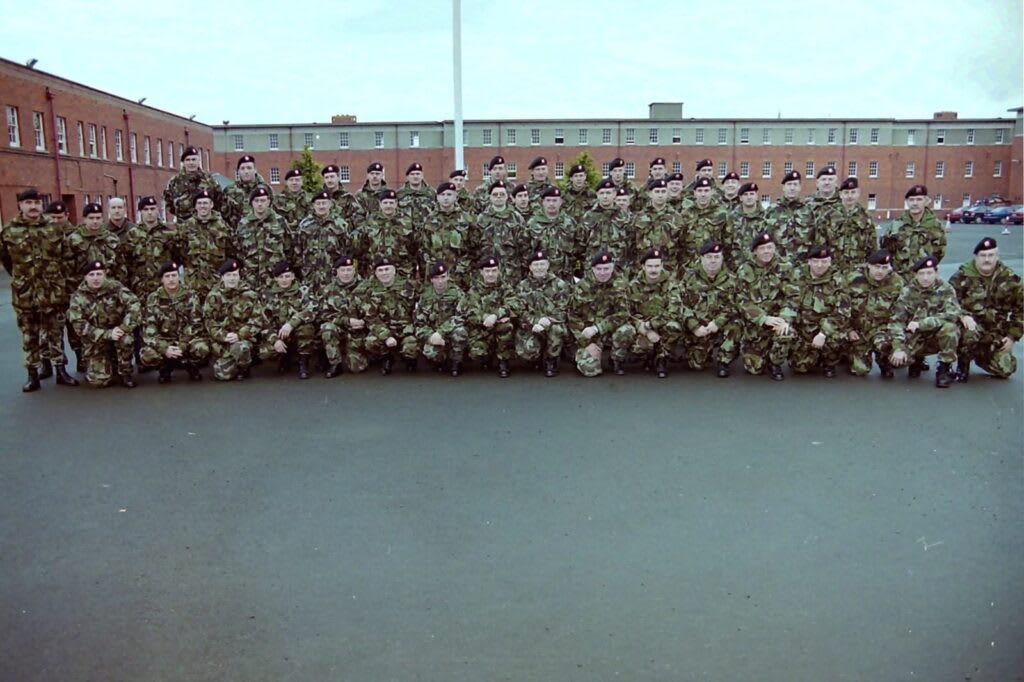
On 14 December 1922 the British Army handed over Islandbridge Barracks to the Irish National Army. In 1942 it was renamed Clancy Barracks, after Peadar Clancy, a hero of the Irish fight for independence, who was killed in 1920. It became home to the Irish Defence Forces’ Ordnance Corps, Engineer Corps, and Supply and Transport Corps. New buildings, including soldiers’ accommodation blocks, were built around the barracks, most of which have now been removed. In 1998 the decision was taken to close Clancy Barracks, and it officially closed on 18 December 2001.
During the 2010s the former barracks site was used as a set for filming historical dramas, including the series ‘Ripper Street’ and a number of episodes of ‘Foyle’s War’.
(Image supplied by Lt Col. Ray Lane)
Who used the barracks?
Throughout its history, the barracks was used by a variety of branches of the army, but mainly horse artillery, cavalry, engineers and ordnance. It was originally built as a base for the Royal Irish Artillery, but following the Act of Union in 1801, that united Ireland and Great Britian, they were amalgamated with the Royal Artillery and moved to Woolwich in London. From then on it was largely used by the Ordnance Board, the Royal Engineers, and as a depot for various mounted regiments, including both the Royal Horse Artillery and cavalry units, such as the Dragoons.
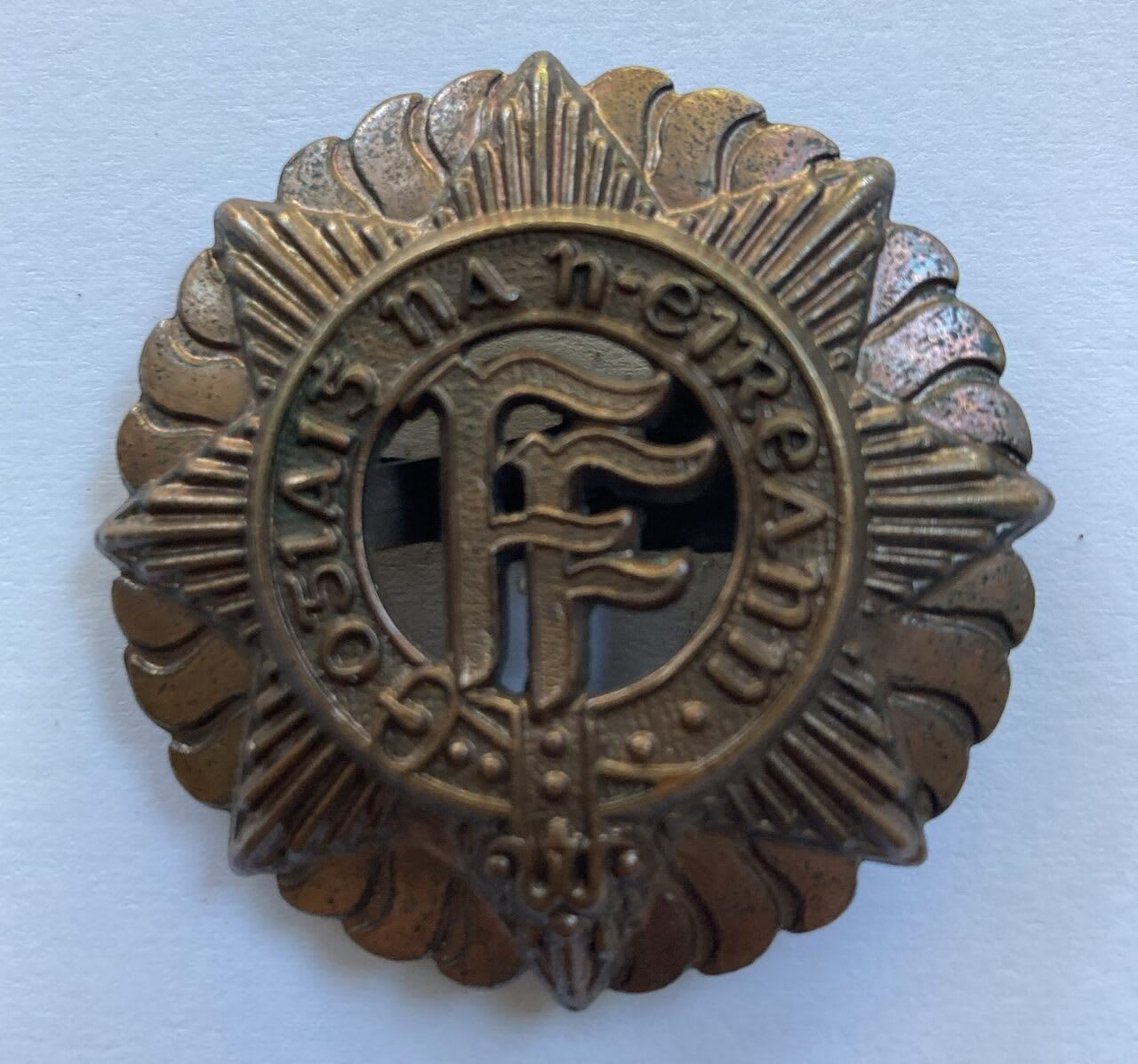
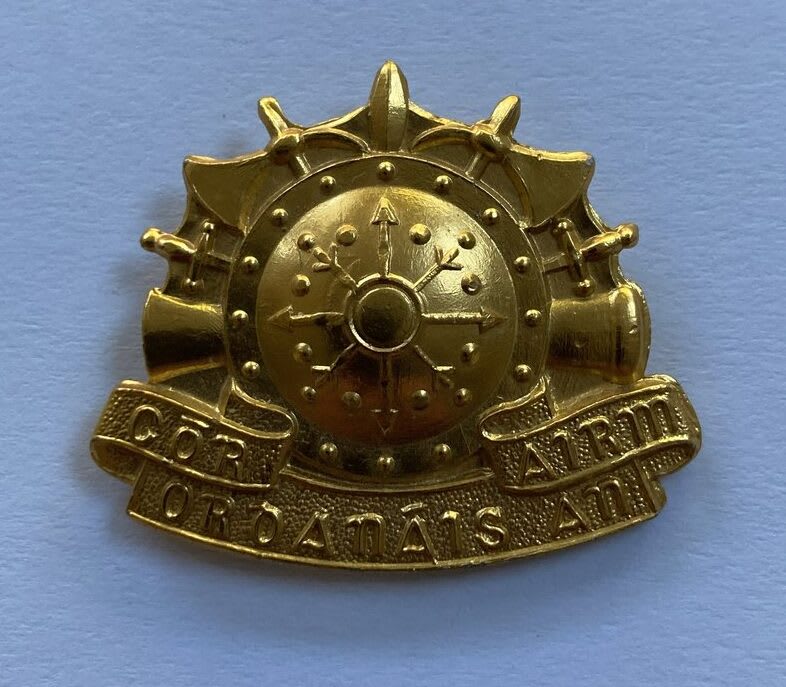
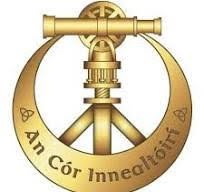
After 1922, it continued these ordnance, engineering and supply roles, with the Defence Forces’ Ordnance Corps, Engineer Corps, and Supply and Transport Corps all housed here. An Ordnance School was established in 1942, with a new one opening in 1991. The barracks housed both the Ordnance Corps’ headquarters and a host of workshops which could undertake major repairs to all types of ordnance equipment for infantry, artillery and cavalry. The Supply and Transport Corps’ main workshops were also located here. This unit comprised 160 personnel, both military and civilian, who provided all major repairs and procurement for soft-skin vehicles (vehicles that do not have armour protection). The Engineer Corps unit at Clancy Barracks had responsibility for maintenance and bridge building.
All these units needed workshops and stores, and many new buildings were constructed. These included workshops for optical equipment, painting, leather working, metal working, carpentry and an armoury for repairing weapons. The many stores included both secure ones for arms and ammunition, and large warehouses for clothing and other equipment.
(Image supplied by Lt Col. Ray Lane)
(Image supplied by Lt Col. Ray Lane)
(Image supplied by Lt Col. Ray Lane)
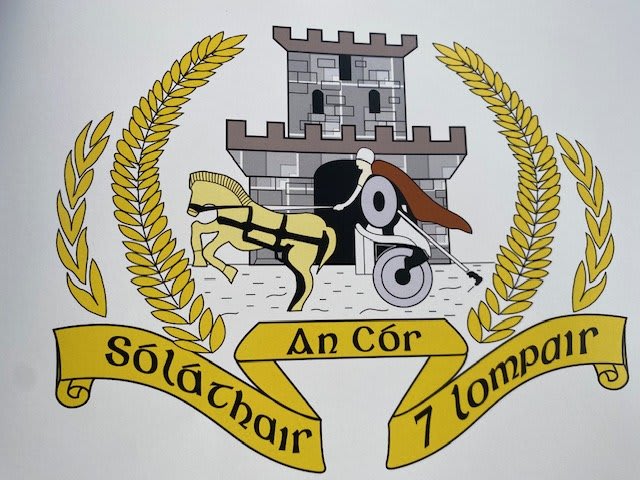
(Image supplied by Lt Col. Ray Lane)
What does an Ordnance Corps do?
Ordnance can refer to guns and weaponry, but it can also be used more widely to include all equipment used by an army. The Ordnance Corps is the part of an army that deals with military stores and supplying the armed forces with all the equipment they need. This includes weapons of all calibres, clothing and uniforms, tents, saddlery, and all forms of equipment. The Ordnance Corps are also responsible for sourcing, repairing and storing the weaponry and related material.
The Illustrations
This history of the barracks illustrates the wide variety of troops who used it and the range of activities that were undertaken there. In particular, it shows the huge amount of troop manoeuvres that were constantly being undertaken in Britain and Ireland throughout the 1800s and early 1900s. These were often in response to various international crises but in peacetime, there was perhaps even more urgency to keep servicemen busy, and this included regular movements around the country. The illustrations by Steve Doogan on the panels include some of the many regiments and troops that were based at the barracks over its 200-year history.

Index >
- Stop 1 > The Officers’ Mess
- Stop 2 > The Schoolhouse
- Stop 3 > Colonnade
- Stop 4 > Peadar Clancy
- Stop 5 > Foley House & Laverty House
- Stop 6 > Tarrant House & Cambridge Sq.
- Stop 7 > Dickie Bird
- Stop 8 > Heuston
- Stop 9 > Cobbles
- Stop 10 > The River Liffey
- Stop 11 > Watch Tower
- Stop 12 > Stables, Saddlery, Armoury & Summerhouse
- Stop 13 > Long Lane Royal