
Stables, Saddlery, Armoury and Summer House
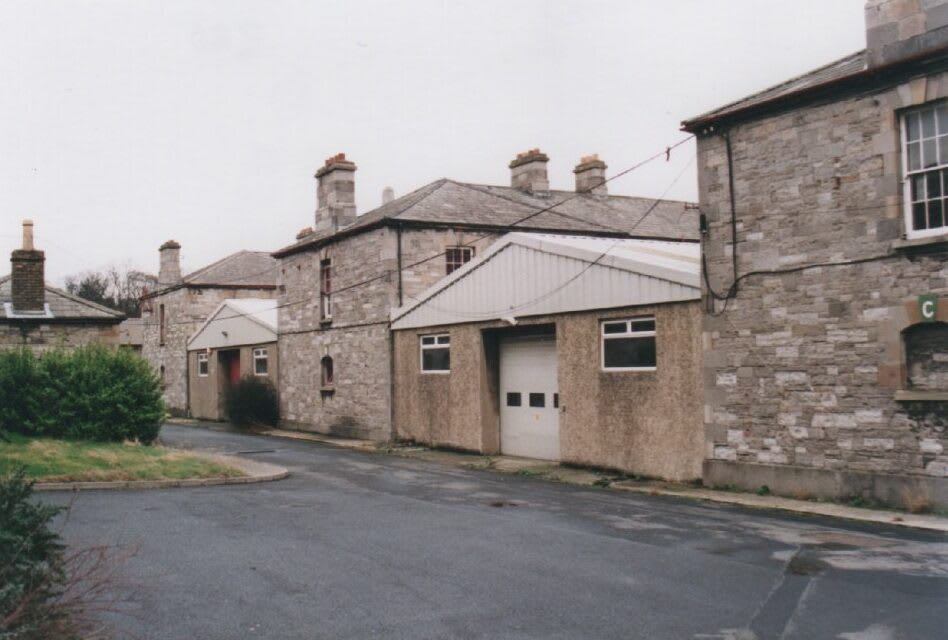
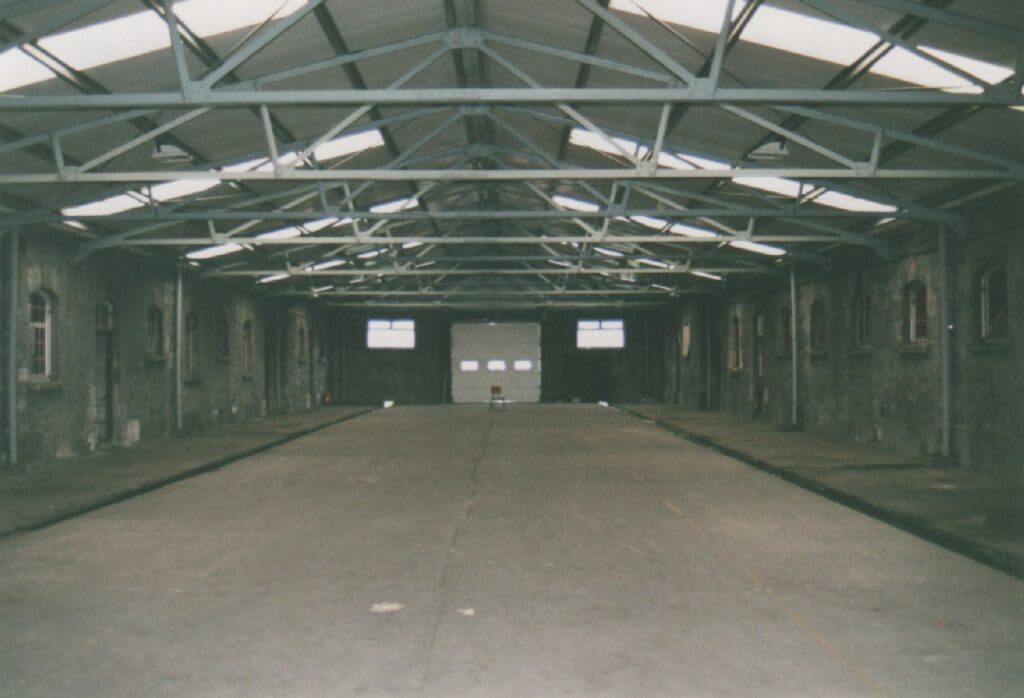
12The Stables, Saddlery and Armoury buildings were built as stable barracks in the mid-1800s, at the same time as the Heuston and Summer House buildings. Each had stabling for horses at ground level with accommodation on the first floor. Around 1900, the buildings were converted into artillery stores and engineering workshops, with offices above. Around the same time the open spaces between the buildings were gradually roofed over, being fully roofed over by 1909. These roofs were removed as part of the redevelopment.
The Summer House building was built as a row of larger stables (‘loose boxes’) for officers’ horses. These had feeding racks and more space, allowing the horse to be untethered and able to move around. Later they were converted into stores.
The buildings
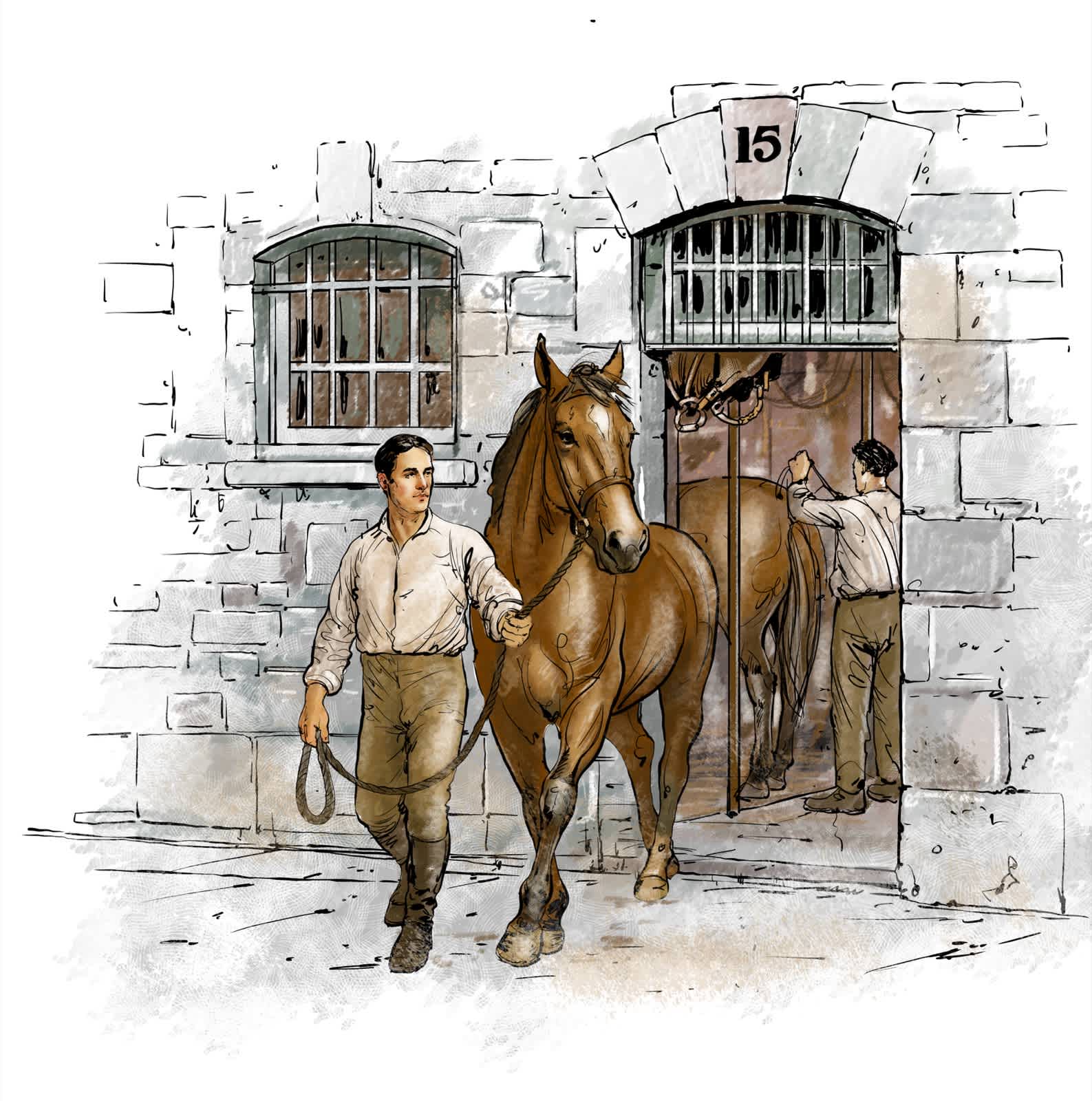
These buildings were built in the 1860s on the site of earlier accommodation and stable blocks that had formed part of the original barracks. In 1840, these earlier buildings had been leased to the Poor Law Commissioners for use as a ‘lunatic’ asylum to house some 500 or 600 patients, who had been moved from the overcrowded House of Correction in Smithfield. By the 1860s the army had taken back the buildings, demolished them and built these purpose-built stable and barrack blocks.
The new buildings had stables on the ground floor and barracks accommodation for the soldiers on the upper floor. The stables were arranged as open stalls to the left and right of the entrance door. Separate doors led to staircases to the soldiers’ accommodation on the first floor.
(Walker Art Library/Alamy Stock Image)
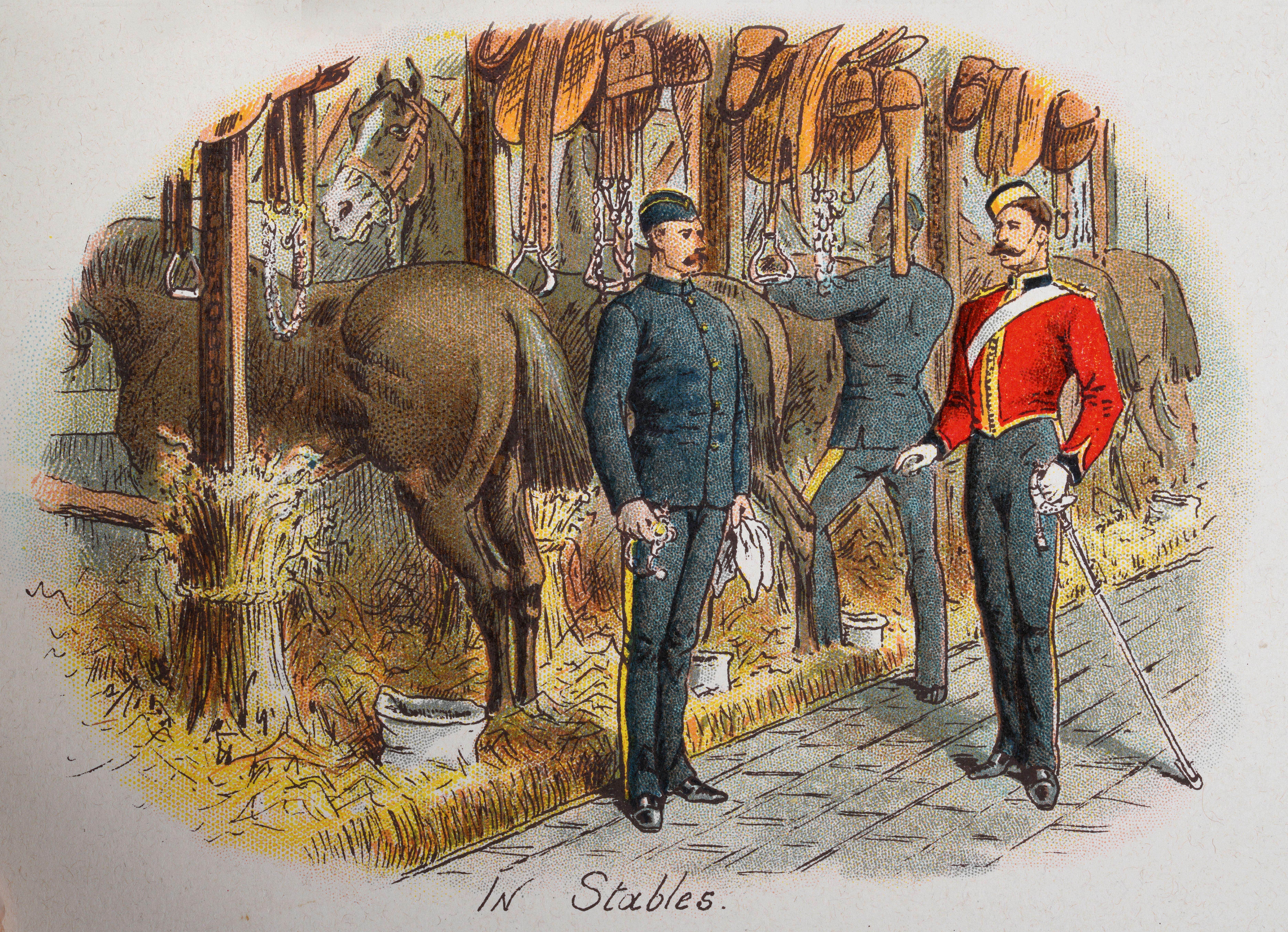
Stabling horses at the barracks
The barracks has a long connection with horses, initially as a cavalry and artillery barracks and then as a remount depot, preparing and supplying horses. The numbers of horses kept at the barracks fluctuated, depending on which regiments were stationed there and what the horses were needed for. For example, in 1821 it was reported that there were 85 horses, whereas by the following year the number had risen to 232. In the 1860s Dublin newspapers advertised horse manure available for farmers and gardeners to buy from Islandbridge Barracks!
The stabling of horses continued through its use as a remount depot for the British Army. In 1904 there were two horses for officers and 113 for troops. Ten years later, in 1914, these numbers were 10 officers’ horses and 115 for troops. After the Irish Defence Forces took over the barracks, they continued to use them as a remount depot.
(Godfrey Timmins (via Lt Col. Ray Lane))
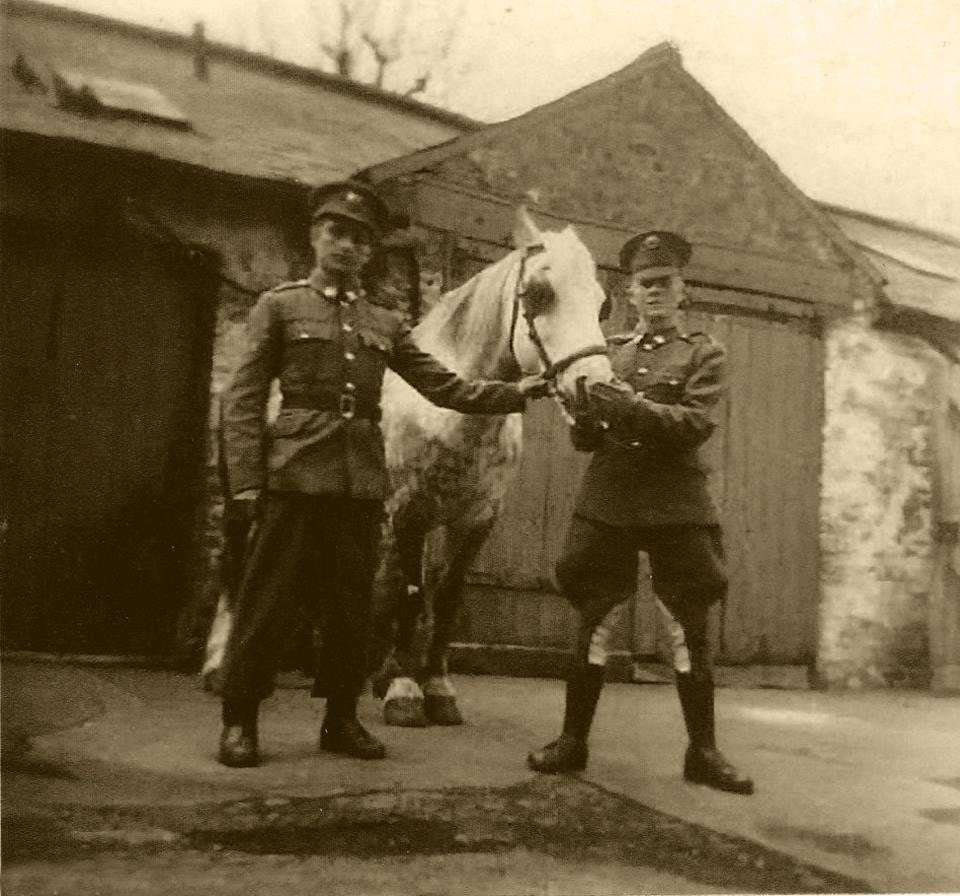
The remount depot
The role of Islandbridge as a cavalry barracks ended in 1896 when there was a serious outbreak of typhoid, resulting in a number of deaths. The cavalry units were moved to the Curragh and elsewhere and when Islandbridge reopened it was purely as ordnance and remount depots. The stables around Upper Square were retained, but these three buildings stopped being used as stables. In October 1899 the Evening Herald advertised 36 sets of stable fittings for sale from Islandbridge, including mangers, racks and bails.
As a remount depot horses were brought to Islandbridge before being redeployed. As well as cavalry horses, there were draught animals for pulling wagons and gun carriages. An example of the role of the remount depot can be seen in January 1901, during the Boer War in South Africa. A newspaper reported that over 100 cavalry horses, purchased in the North of Ireland, had been brought by train to Amiens Street Railway Depot in Dublin, and then to the remount depot at Islandbridge. From there they were going to be sent to Queenstown (modern-day Cobh, Co. Cork) to be shipped to South Africa.
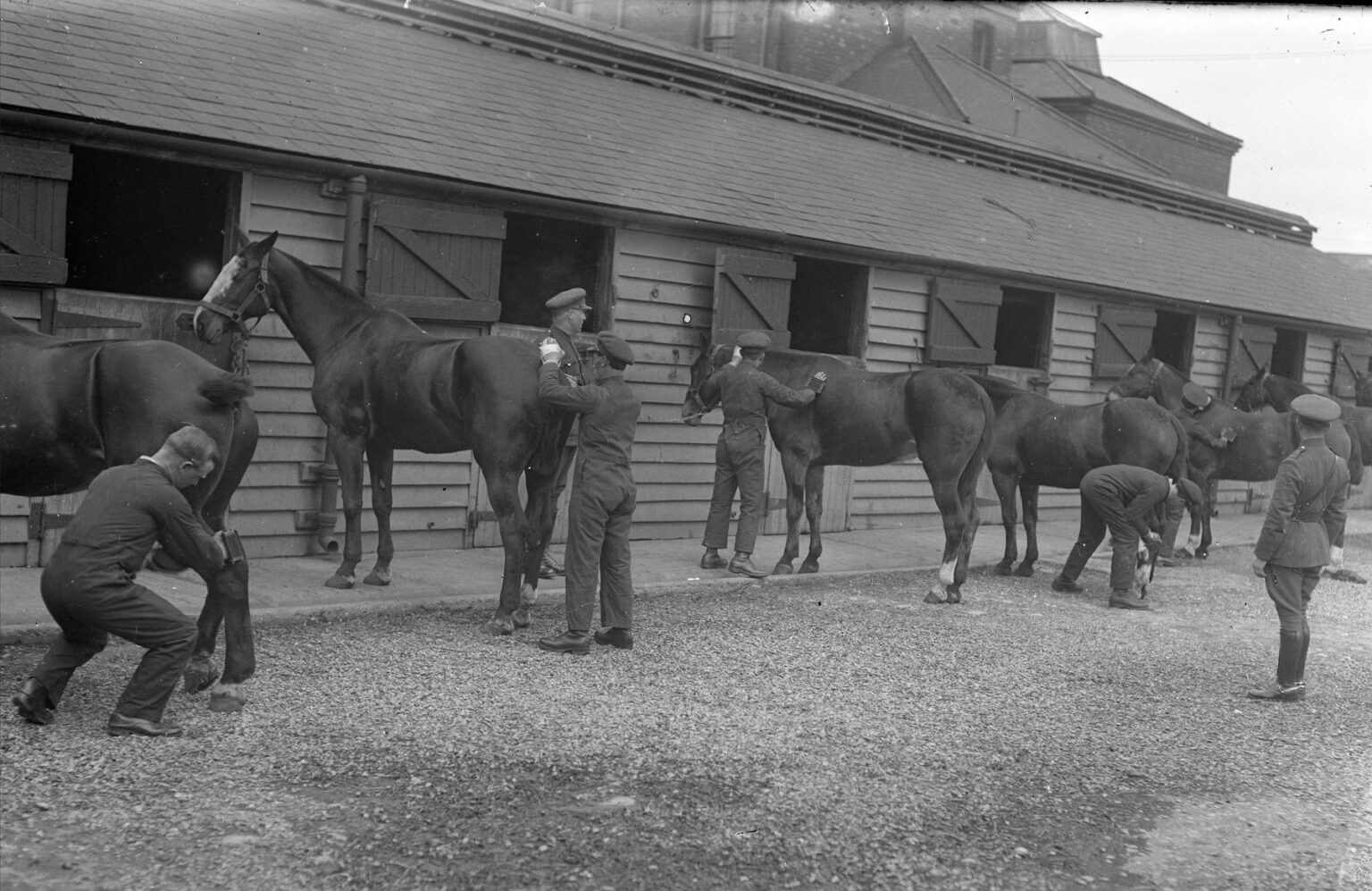
(Military Archives, Ireland: IE-MA-GPN-045-019)
Stores and workshops
Once it had been decided not to house cavalry units at Islandbridge anymore, these three purpose-built stable and barrack blocks were no longer required and the three buildings were converted into stores and workshops. The spaces between them were roofed over. This roofing appears to have begun at the very end of the 1890s when approximately one third of the space from the west end was roofed. It was completed by about 1909 and then re-roofed in the second half of the 20th century.
Latterly these buildings were used by the Irish Defence Forces as optical workshops for repairing equipment, such as gun sights and binoculars, and for training personnel.
(Image by Alistair Lindsay)
(Image by Alistair Lindsay)

Index >
- Stop 1 > The Officers’ Mess
- Stop 2 > The Schoolhouse
- Stop 3 > Colonnade
- Stop 4 > Peadar Clancy
- Stop 5 > Foley House & Laverty House
- Stop 6 > Tarrant House & Cambridge Sq.
- Stop 7 > Dickie Bird
- Stop 8 > Heuston
- Stop 9 > Cobbles
- Stop 10 > The River Liffey
- Stop 11 > Watch Tower
- Stop 12 > Stables, Saddlery, Armoury & Summerhouse
- Stop 13 > Long Lane Royal