

The River Liffey
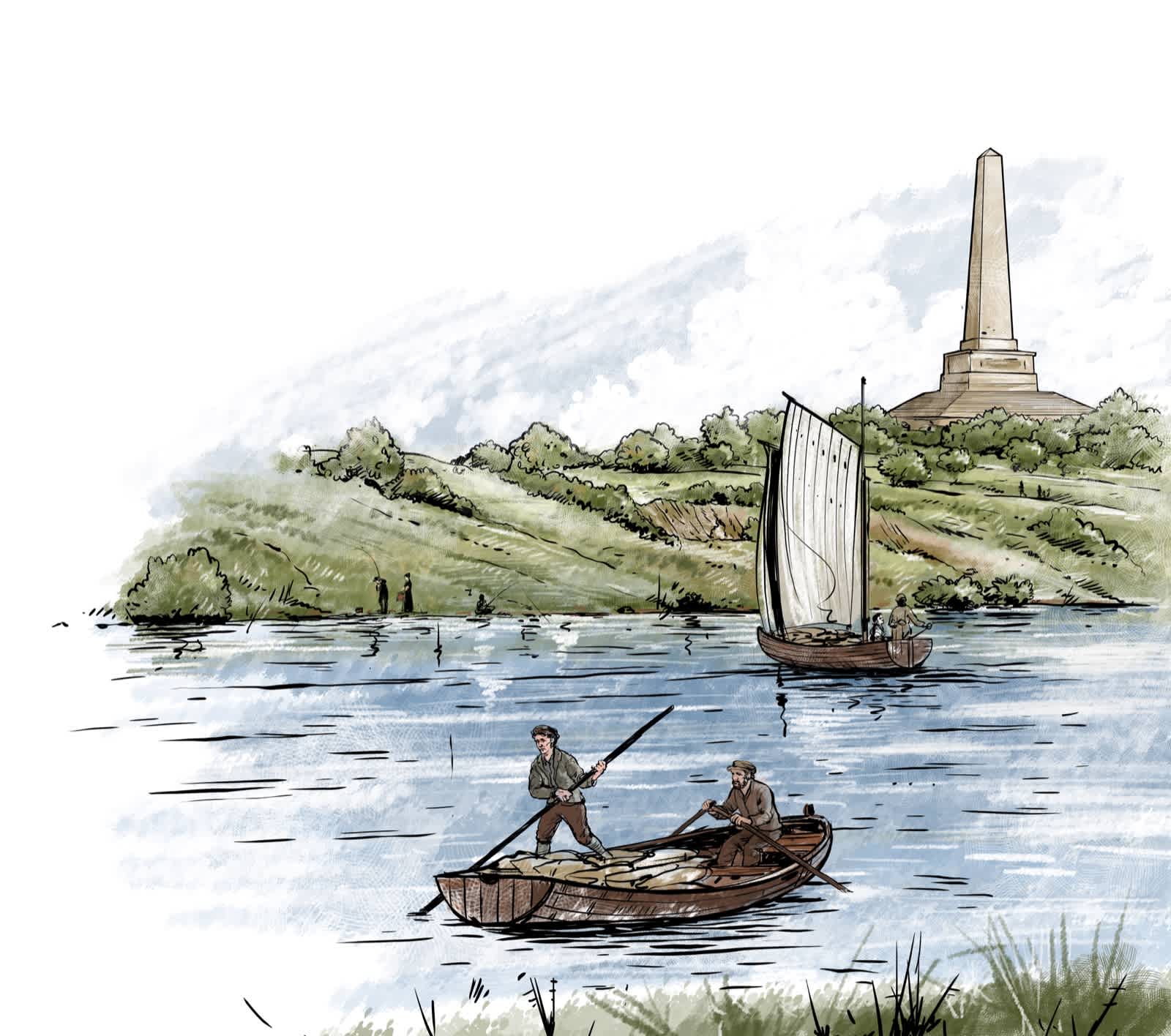
10When the Barracks were first built in 1797, much of the river frontage was covered with gardens. Near Island Bridge, then called Sarah’s Bridge, was the first barracks hospital, giving its name to Hospital Lane. It lay on the site of an earlier brewery, built in the 1690s. When the barracks expanded to the river in the 1800s, a wall was built along the riverfront blocking the view. It remained until around 2006 when it was removed.
For most of the life of the barracks the view across the river to Phoenix Park would have been of green fields and trees. To the right is the granite obelisk of the Wellington Monument, built between 1817 and 1861.
Islandbridge
From the 1680s the village of Islandbridge developed and included a number of large houses with extensive gardens and glasshouses. Along the river there were fishery weirs and a variety of mills that used the river water, including for calico and muslin production. In 1787 flooding destroyed the original bridge and in 1793 the present bridge was built.
This area of Dublin was still fairly rural before the building of the railways in the 1840s and even after, it remained a pleasant place to walk or to fish. However, even by the 1830s the area was becoming less exclusive, probably due to the presence of the barracks, and there were five taverns. A number of the former grand houses were converted into boarding houses. The most famous of the taverns was the Cambridge Arms Hotel which was closed and subsumed into the barracks after 1879.
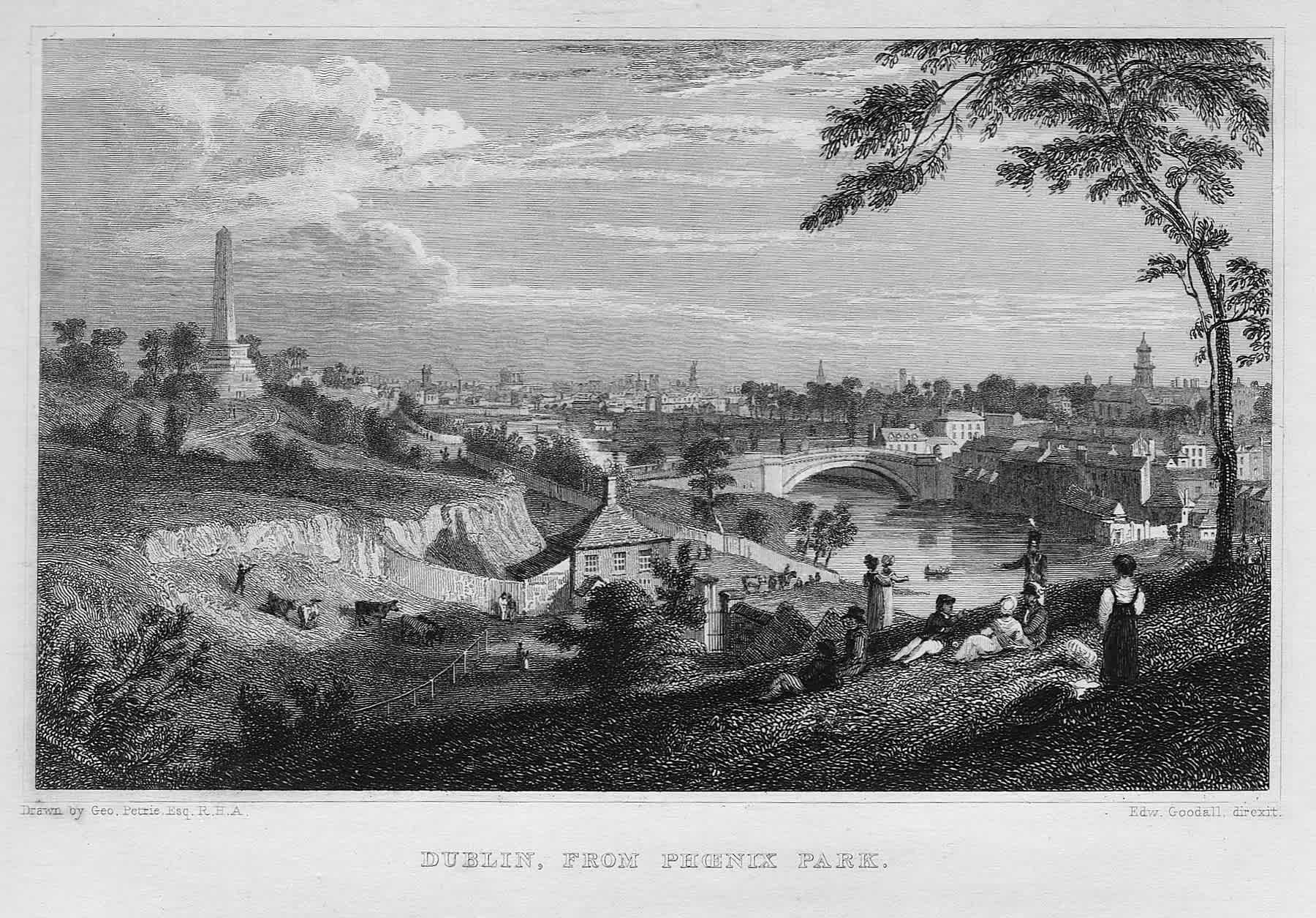
(Image supplied by Alistair Lindsay, from Ireland Illustrated from Original Drawings (1832), with descriptions by G. N. Wright and illustrations by G. Petrie, W. H. Bartlett and T. M. Baynes)
Sarah Bridge
A new bridge, completed in 1793, was named Sarah Bridge after Sarah Fane, the wife of John Fane, 10th Earl of Westmorland and Lord Lieutenant of Ireland. A beautiful, wealthy heiress, she had eloped to Gretna Green at the age of 18 to marry Fane against her parents’ wishes. She laid the first stone of the bridge on 22 June 1791, but died in Dublin two years later at the age of just 29.

(Ozias Humphry, Public domain, via Wikimedia Commons)
The Wellington Monument
The large stone obelisk in Phoenix Park is the Wellington Monument. It was built between 1817 and 1861 to commemorate Arthur Wellesley, the 1st Duke of Wellington. He was born in Dublin and led the British victory at the battle of Waterloo in 1815. The obelisk itself was in place in 1822, but lack of funds led to delays in finishing the monument. When Wellington died in 1852, new plans were drawn up and it was finally finished in 1861.
It is made of granite, with four bronze plaques on its plinth that are cast from French cannons captured at Waterloo. At 62 metres in height, it is the tallest obelisk in Europe.
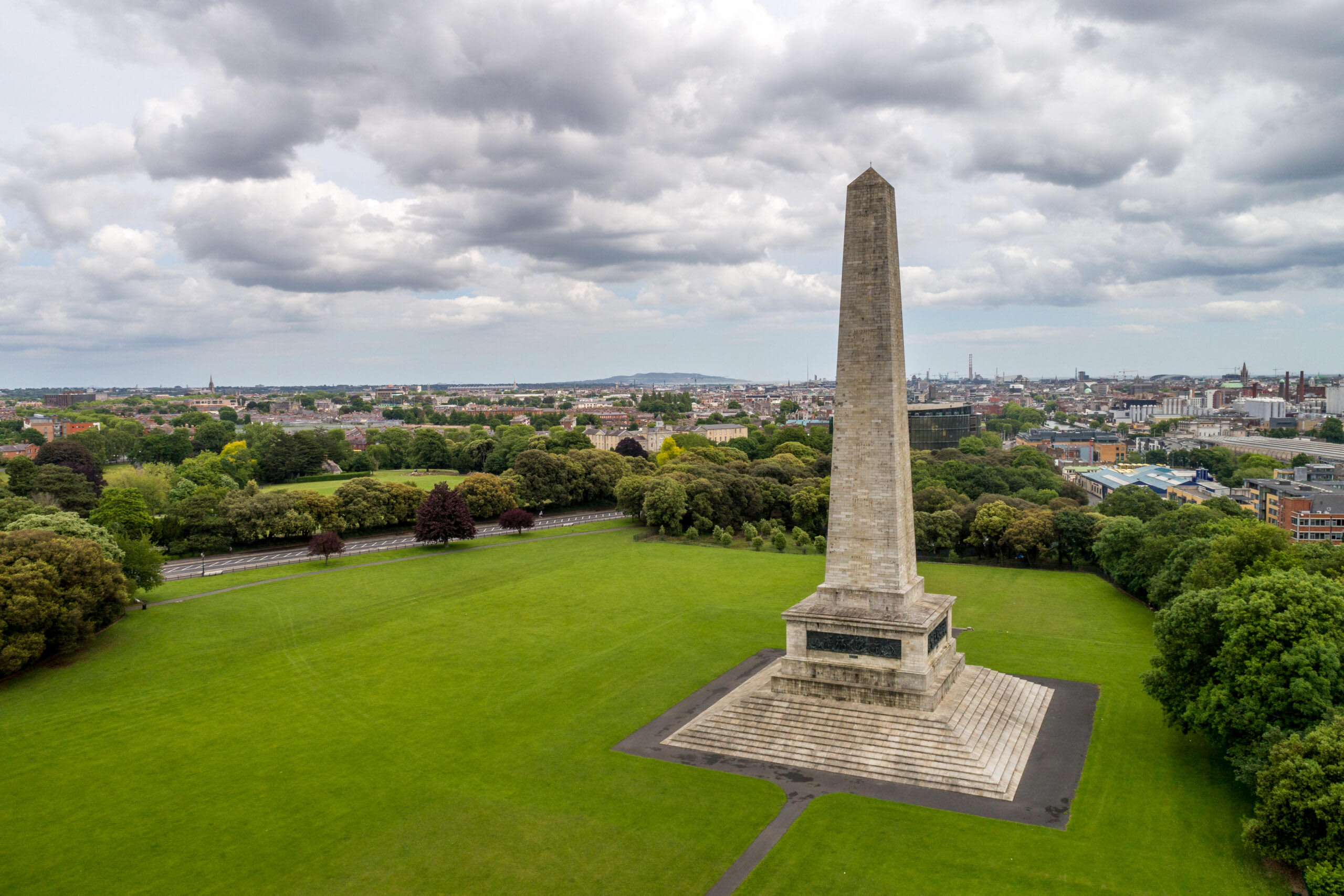
(Ben Ryan Photography/Alamy Stock Image)

Index >
- Stop 1 > The Officers’ Mess
- Stop 2 > The Schoolhouse
- Stop 3 > Colonnade
- Stop 4 > Peadar Clancy
- Stop 5 > Foley House & Laverty House
- Stop 6 > Tarrant House & Cambridge Sq.
- Stop 7 > Dickie Bird
- Stop 8 > Heuston
- Stop 9 > Cobbles
- Stop 10 > The River Liffey
- Stop 11 > Watch Tower
- Stop 12 > Stables, Saddlery, Armoury & Summerhouse
- Stop 13 > Long Lane Royal