
Peadar Clancy
4Following Irish Independence in 1922, Islandbridge Barracks was handed over to the Irish State. On 21 November 1942 the barracks were officially renamed Clancy Barracks, after Peadar Clancy, a hero of the Irish War of Independence.
Born in 1889 in Co. Clare, Clancy had trained as a draper. In 1913 he moved to Dublin to work and joined the Irish Volunteer Force. He played an active role in the 1916 Rising and was imprisoned. On his release in 1917, he returned to Dublin. He rose to second-in-command of the Dublin Brigade of the Irish Republican Army and Director of Munitions. He was a close ally of Michael Collins and was involved in the planning of the Bloody Sunday attack on British agents in November 1920. He was arrested on the eve of the attack and held at Dublin Castle, where he was executed on 21 November.
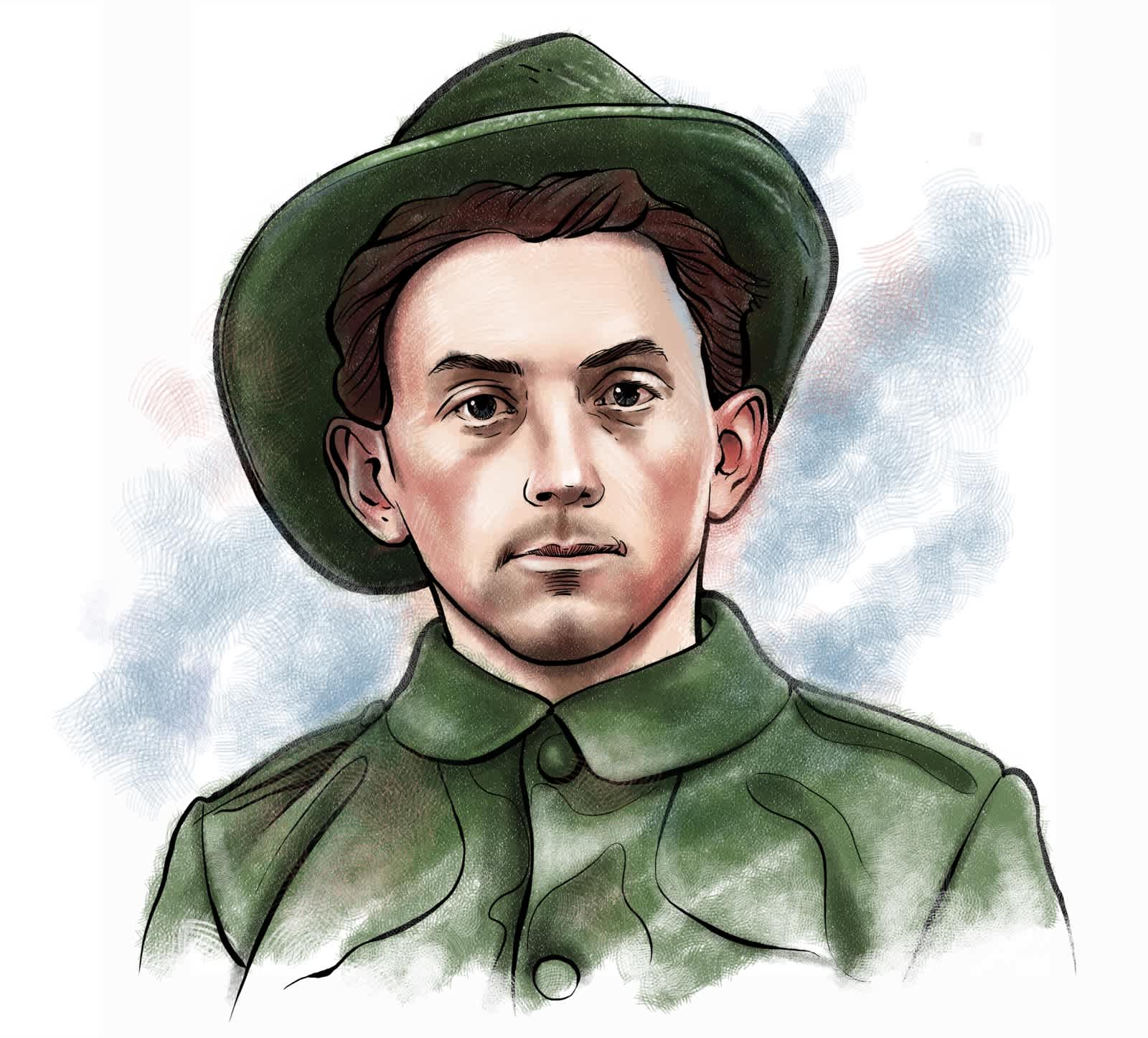
Peadar Clancy (1889-1920)
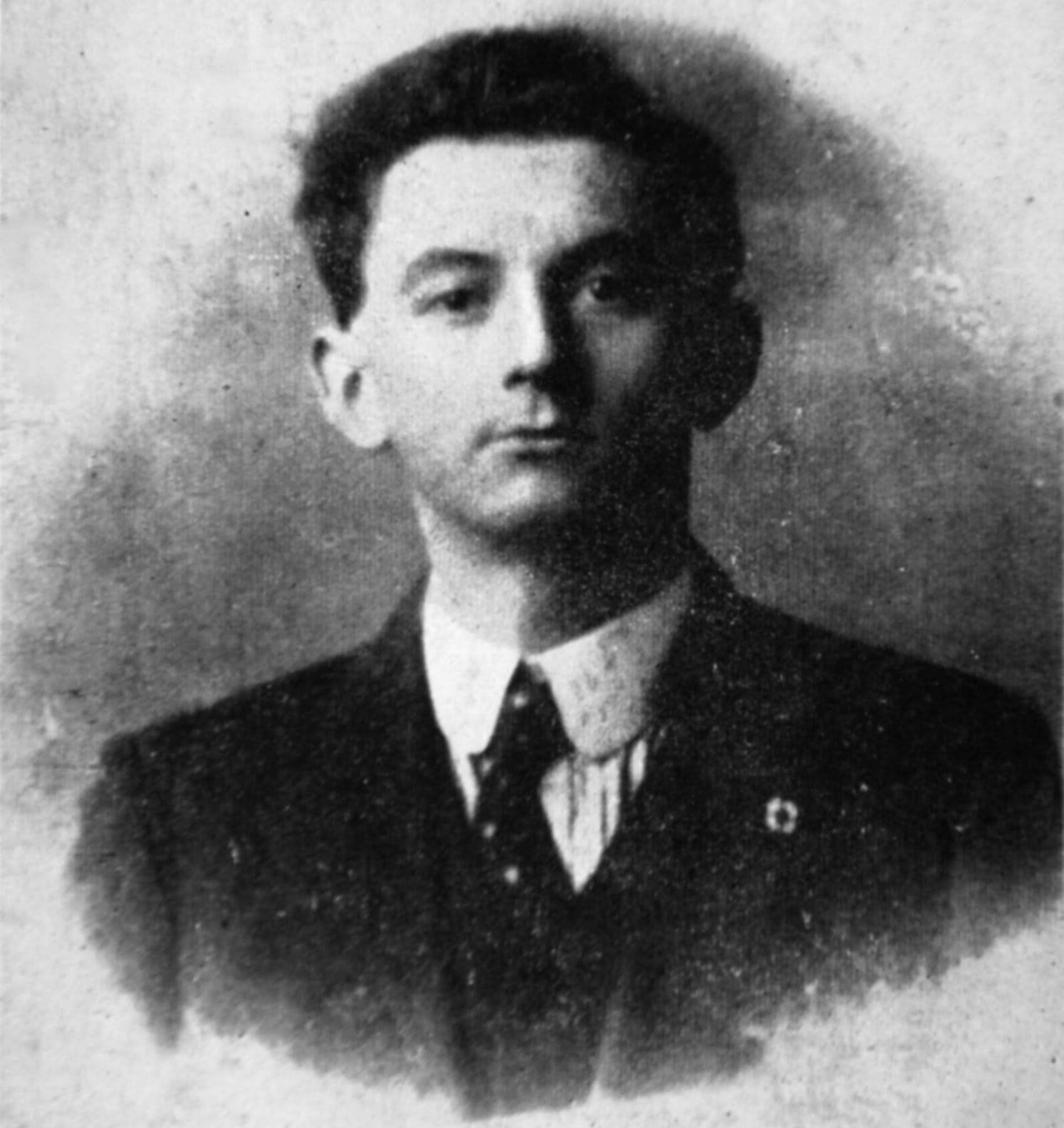
Peadar Clancy was a hero of the Irish fight for independence, from before the 1916 Easter Rising until his premature death in November 1920. His name, however, is less well-known today, making his commemoration here at Clancy Quay all the more important.
Clancy was born in Carrowreagh East, Cranny, Co. Clare in 1889 and trained as a draper in Kildysart, Co. Clare. While there he helped start local branches of both Sinn Fein and the Gaelic League. After working elsewhere in Ireland, he moved to Dublin in 1913, joining the newly-formed Irish Volunteers.
In the 1916 Rising he served in the Four Courts garrison, taking command of Church Street Bridge (now Father Mathew Bridge). Sentenced to death for his part in the Rising, the sentence was commuted to a ten-year prison term and he was released in the amnesty of 1917. Back in Dublin he helped to reorganise the Volunteers and in the Clare East by-election of 1917, he was chosen by Sinn Féin as their candidate but withdrew in favour of Éamon de Valera, the future President of Ireland.
He became vice-commandant of the Irish Republican Army’s (IRA) Dublin Brigade and was a close associate of Michael Collins. He was also a partner in a draper’s store, The Republican Outfitters, at 94 Talbot St. in Dublin, which became an important meeting place for the IRA. He planned and took part in the escape of Republican prisoners from Mountjoy and Manchester gaols, and in the Spring of 1920, while imprisoned in Mountjoy, he led a hunger strike, resulting in government concessions and the release of prisoners. In October the Republican Outfitters shop was wrecked by British Forces and closed.
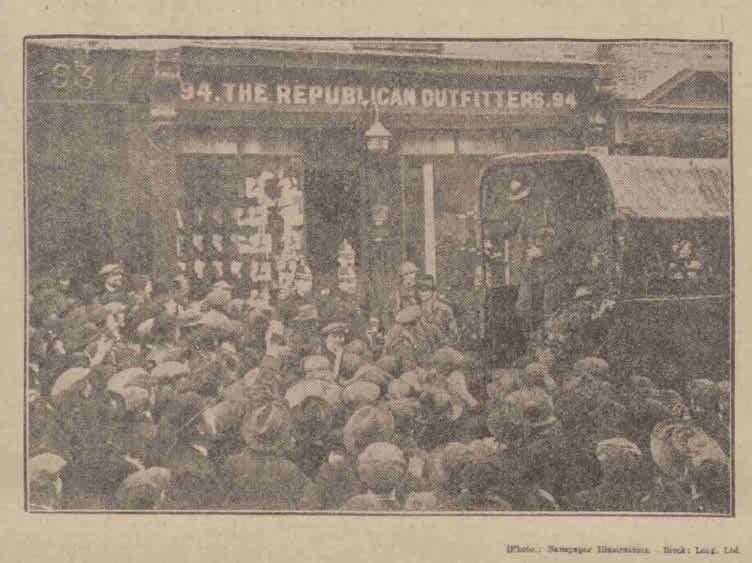
(Newspaper image © The British Library Board. All rights reserved. With thanks to The British Newspaper Archive (www.britishnewspaperarchive.co.uk) and to SWNS)
Clancy was appointed the IRA’s Director of Munitions, and with Collins, Cathal Brugha and Dick McKee, planned the assassination of British intelligence agents in Dublin on 21 November 1920. The day before the attack, Clancy and McKee were captured by British Auxiliaries at 36 Lower Gloucester Street (now Sean McDermott Street) and taken to Dublin Castle. The assassinations went ahead the following morning and were followed in the afternoon by a reprisal attack on civilians by British Forces, leading to the name ‘Bloody Sunday’. That night Clancy, McKee and Connor Clune were shot dead at Dublin Castle.
Clancy was an outstanding leader and military tactician, particularly in covert warfare. As Director of Munitions, he oversaw the IRA’s undercover ordnance workshop in Parnell Street, Dublin and developments such as the manufacturing of grenades for use in their campaigns. It was therefore particularly fitting that Clancy Barracks, so long associated with artillery and ordnance, should be named after him on 21 November 1942.
Islandbridge Barracks 1921-1924
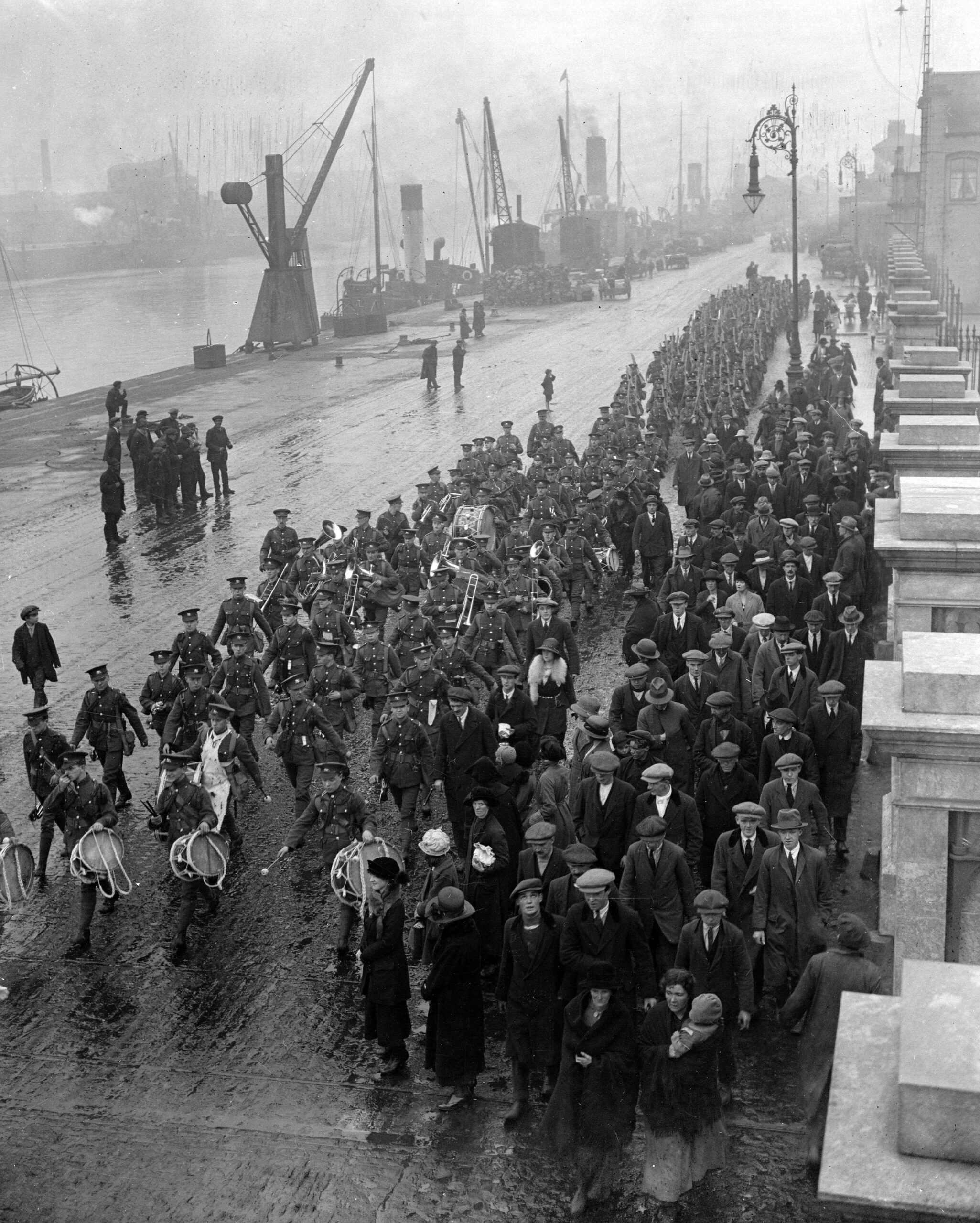
After the signing of the Anglo-Irish Treaty ending the War of Independence in December 1921, the withdrawal of British troops began the following month. This was a huge logistical challenge, as in October 1921 there were still 57,116 British Army personnel in Ireland. It also had an enormous impact on the many towns around Ireland that had been home to barracks for long periods of time.
By December 1922, when the Irish Free State was officially established, the only British troops remaining were those in Dublin, and in the Treaty ports (Spike Island, Berehaven and Lough Swilley). The troops in Dublin were withdrawn over four days, starting on 14 December 1922, when the Viceregal Lodge in Phoenix Park (now the President of Ireland’s official residence, Áras an Uachtaráin), Richmond Barracks in Inchicore, and Islandbridge Barracks, along with the Remount Depot and Ordnance Depot, were handed over. Newspapers estimated that between 5,000 and 6,000 British troops marched to the North Wall in Dublin over those four days to depart on ships to Britain, with four ships sailing each day.
A more localised issue was publicised by The Irish Independent on 4 March 1922. It reported that an estimated 20,000 guns remained in British military custody and were held in the Ordnance Stores at Islandbridge. Four years earlier in 1918 stocks of guns and sporting ammunition had been requisitioned by the British Government, due to the War of Independence in Ireland, and in July 1920 the legal trade in guns had been entirely shut down. By 1922 this had resulted in a number of gunsmiths having gone out of business, whilst farmers and others who used firearms to protect their crops had been unable to use them and had no access to ammunition.
(Smith Archive/Alamy Stock Image)
The National Army
The National Army was the name given to the armed services of the new Irish Free State. On the withdrawal of the British Army, they largely took over the existing military infrastructure, so Islandbridge Barracks remained a barracks and ordnance depot. From 1924 the National Army became known as the Defence Forces comprising the Irish Army, Air Corps, Naval Services and Reserves.
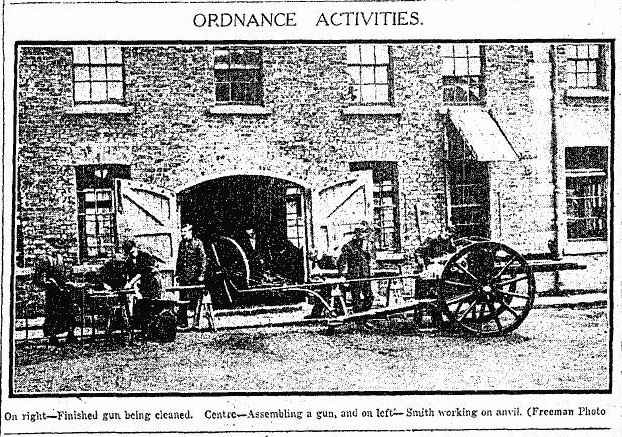
On 23 March 1923 a new Artillery Corps was formed at Islandbridge, and in August of that year the Freeman’s Journal sent a reporter and photographer there to report on the activities of the new National Army. In addition to the Artillery Corps, the Ordnance Corps were still operating at Islandbridge, repairing all types of arms from large field guns to small arms. The Remount Trades Branch, which dealt with repairing horse transport wagons, had recently been relocated back there and included carpenters, painters and blacksmiths.
(With thanks to Irish Newspaper Archives and The Freeman’s Journal)

Index >
- Stop 1 > The Officers’ Mess
- Stop 2 > The Schoolhouse
- Stop 3 > Colonnade
- Stop 4 > Peadar Clancy
- Stop 5 > Foley House & Laverty House
- Stop 6 > Tarrant House & Cambridge Sq.
- Stop 7 > Dickie Bird
- Stop 8 > Heuston
- Stop 9 > Cobbles
- Stop 10 > The River Liffey
- Stop 11 > Watch Tower
- Stop 12 > Stables, Saddlery, Armoury & Summerhouse
- Stop 13 > Long Lane Royal