
Dickie Bird
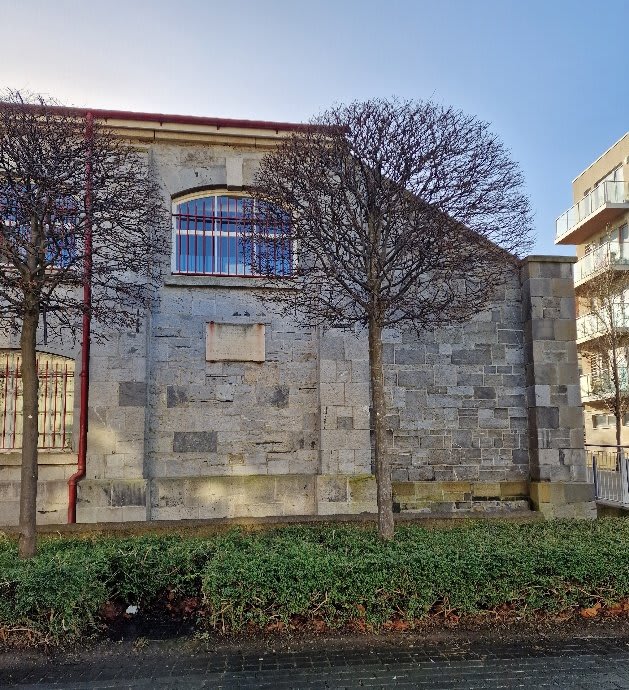
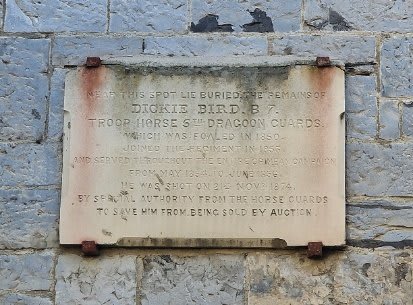
7A plaque on the wall of the Heuston building commemorates a very special horse called Dickie Bird. He served with the 5th Dragoon Guards regiment in the Crimean War from 1854 to 1856. After the war, he lived here at the barracks, regarded as a mascot by the regiment.
When he died in 1874, he was so beloved that he was buried here. When the site was being redeveloped, archaeologists found his skeleton and it is now preserved in the National Museum of Ireland’s collections.
The Battle of Balaclava
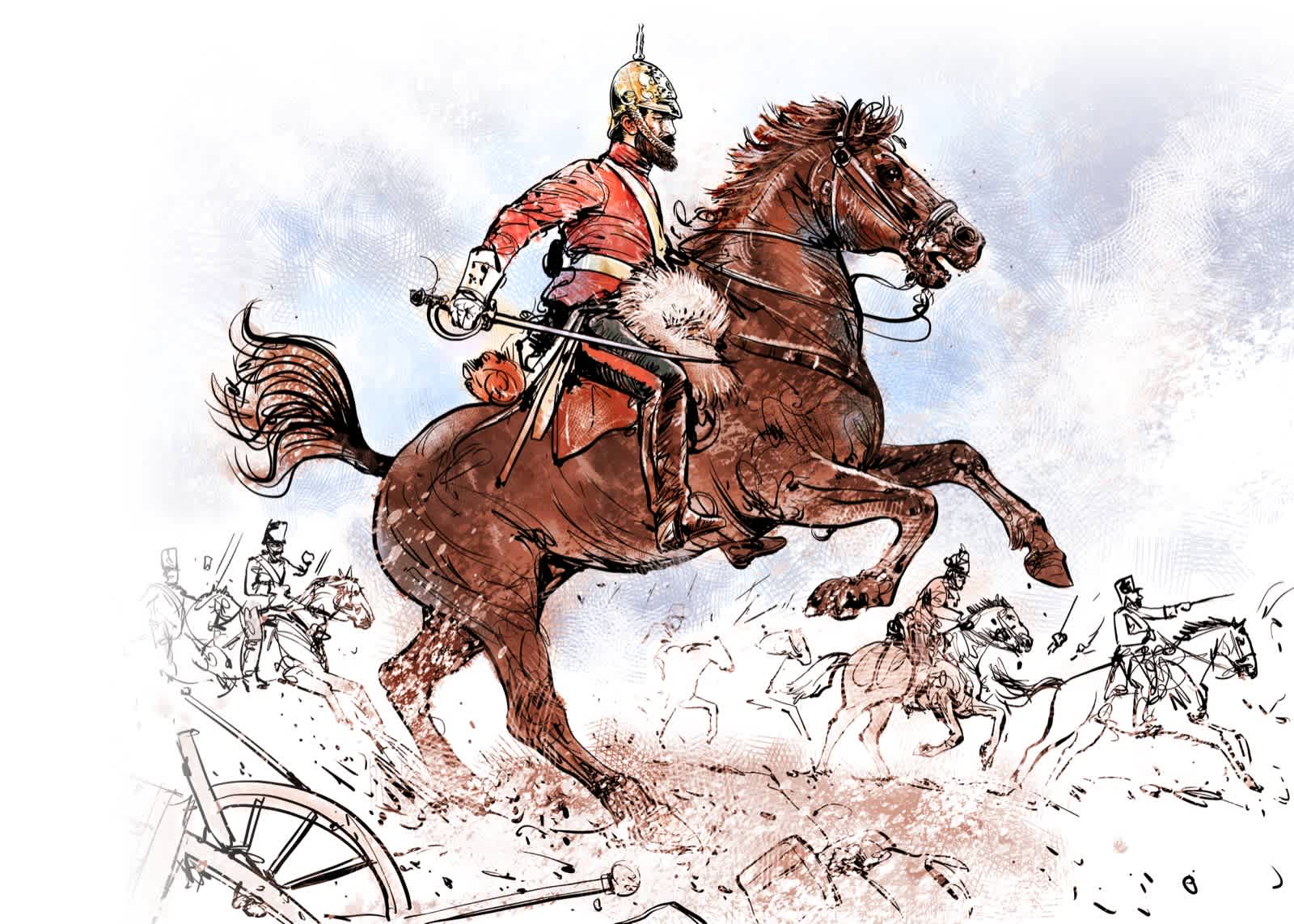
The battle took place on 25 October 1854, during the Crimean War (1853-1856). The Charge of the Heavy Brigade, that Dickie Bird took part in, was just one encounter during the battle. The Heavy Brigade was made up of the 6th (Inniskilling) Dragoons, the 1st Dragoon Guards, the 4th and 5th Dragoon Guards, and the Royal Scots Greys. In total they comprised around 800 men, armed primarily with sabres, and facing about 3,000 Russian cavalry.
The British, commanded by Brigadier-General James Scarlett, were downhill of the Russians, putting them at a disadvantage. Scarlett ordered a charge but because of the rough ground and the incline, the British cavalry could only trot. However, they rode straight into the Russian frontline and fought furiously. In just under ten minutes, they had won a resounding victory over the Russians. Ten British cavalrymen were killed and about one hundred injured. The Russians lost between 40 and 50 men, with a further 200 wounded.
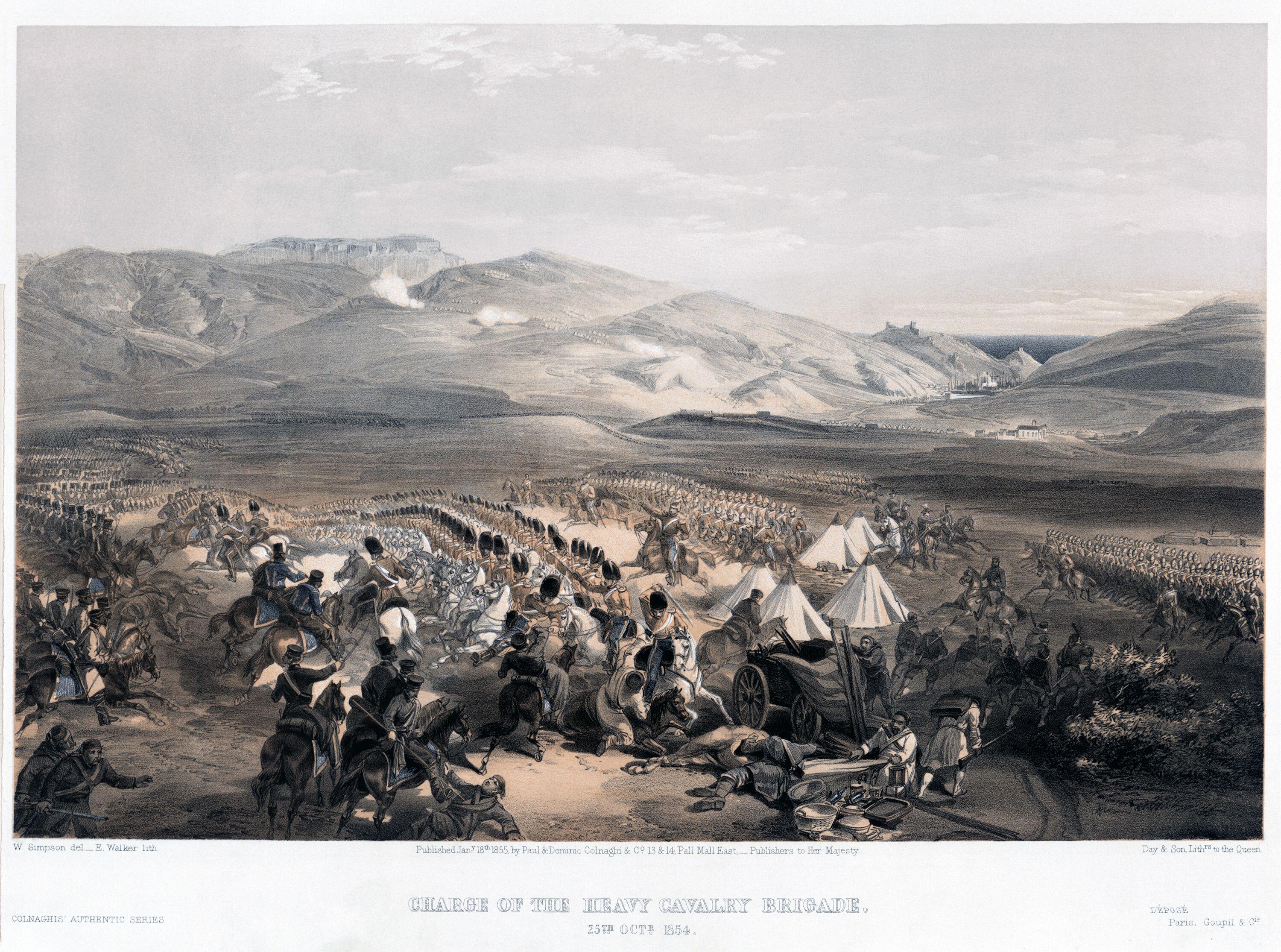
(Pictorial press Ltd/Alamy Stock Image)
The Rediscovery of Dickie Bird
The plaque on the wall of Heuston commemorating Dickie Bird reads:
Near this spot lies buried the remains of
Dickie Bird B7
Troop Horse 5th Dragoon Guards
Which was foaled in 1850
Joined the Regiment in 1853
And served throughout the entire Crimean Campaign
From May 1854 to June 1856
He was shot on the 21st Nov 1874
By special authority of the Horse Guards
To save him from being sold at auction.
It was assumed when archaeological work started on the site in 2007, that Dickie Bird would be found close to the plaque. However, the archaeologists found no sign of him, until they came across a large square pit at the northern edge of the site. It contained two horse skeletons, a male and a female. The male was identified as Dickie Bird. The two horses had been buried with a bridle and reins, which were stamped ‘1846’. It appears that at some point in the 1960s the plaque was moved from its original location, which explained why it was so far from where Dickie Bird was buried.
But the archaeologists uncovered a further mystery. The plaque clearly states that he was shot to save him from auction, meaning to save him from being sold for dog meat, glue, or fertiliser. However, when his skeleton was examined, it was found that he had not been shot but had been killed by a blow to the head, called pole-axing. Although this sounds a brutal way to kill a horse, it was a common method of killing large animals and when done by an experienced butcher or slaughterman would be swift and painless.

Index >
- Stop 1 > The Officers’ Mess
- Stop 2 > The Schoolhouse
- Stop 3 > Colonnade
- Stop 4 > Peadar Clancy
- Stop 5 > Foley House & Laverty House
- Stop 6 > Tarrant House & Cambridge Sq.
- Stop 7 > Dickie Bird
- Stop 8 > Heuston
- Stop 9 > Cobbles
- Stop 10 > The River Liffey
- Stop 11 > Watch Tower
- Stop 12 > Stables, Saddlery, Armoury & Summerhouse
- Stop 13 > Long Lane Royal