

Tarrant House and Cambridge Square
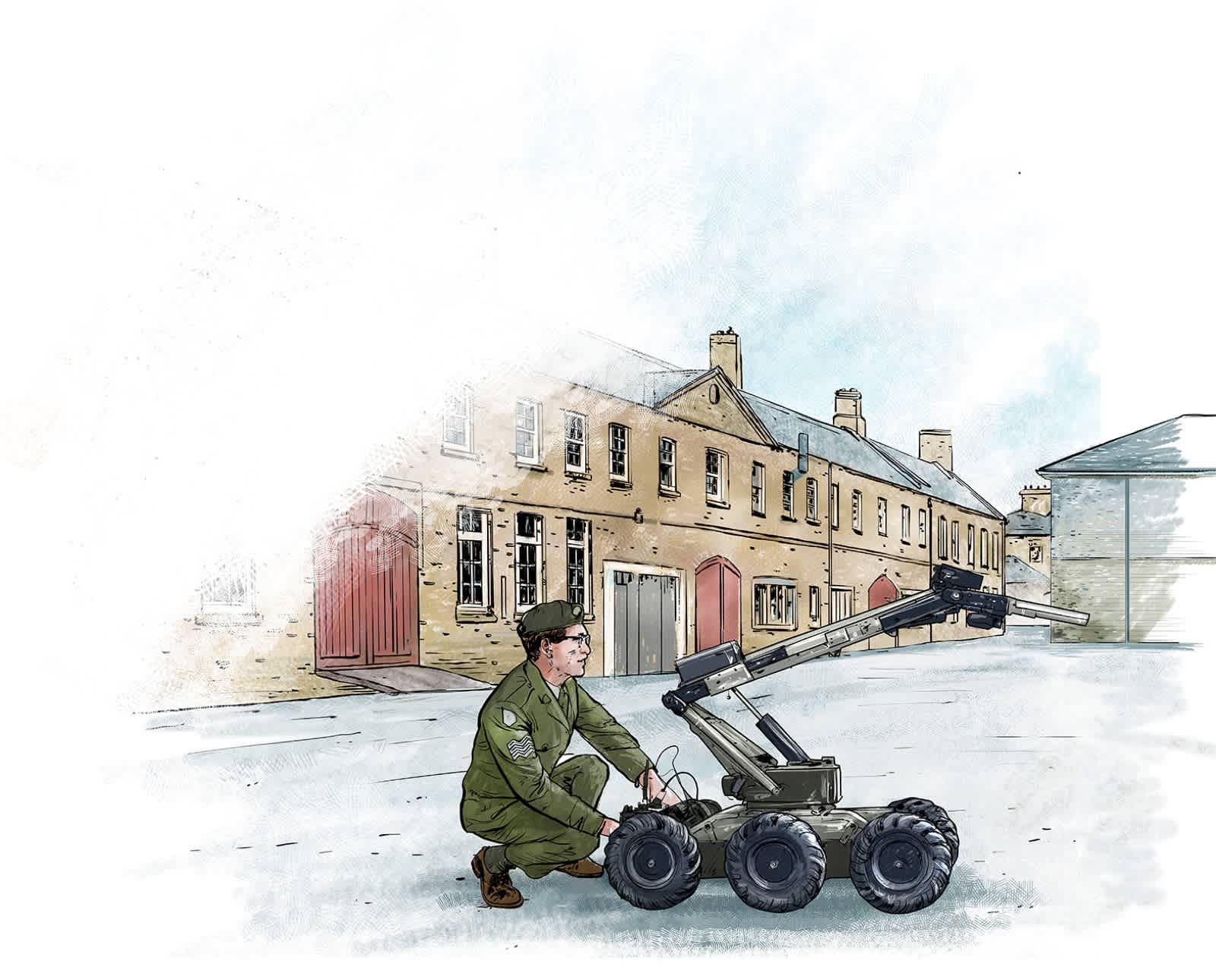
6Tarrant House, built of brick with limestone and some granite, forms the northern side of Cambridge Square. It is one of the oldest buildings on the site, with parts dating to around 1797. It is named after General Charles Tarrant, who was involved in the design of the barracks in the 1790s. Initially, it contained officers’ quarters at either end, with engineering workshops in between. Parts of it were later used as a hospital. From the mid-1800s it was used for workshops and stores.
Cambridge Square was named after Prince George, cousin of Queen Victoria, who became Duke of Cambridge in 1850 and was Commander-in-Chief of British Armed Forces from 1856 to 1895.
The building
Tarrant House is one of the oldest buildings on the site and has seen many changes to its use. Initially it held officers’ quarters in the eastern and western five bay sections, both of which had basements, and engineering workshops in-between. Around 1810 it was proposed to turn it into a hospital and by 1827 this had happened. In the 1830s it was leased to civilian tenants, before being returned to military use. By the later 1800s and the 1900s it was used as workshops and stores, being opened up internally into a series of large spaces. After the barracks was handed over to the Irish National Army in 1922, the central section of Tarrant House was used as a foundry, armourers’ workshop, and carpenters’ workshop for the Ordnance Corps.
During the present-day development, when the building was being refurbished, a large underground coal cellar was found running under the front gardens. It was a reminder of when coal was the primary source of fuel for heating and cooking, and of the huge amounts that had to be supplied to keep the barracks buildings running.
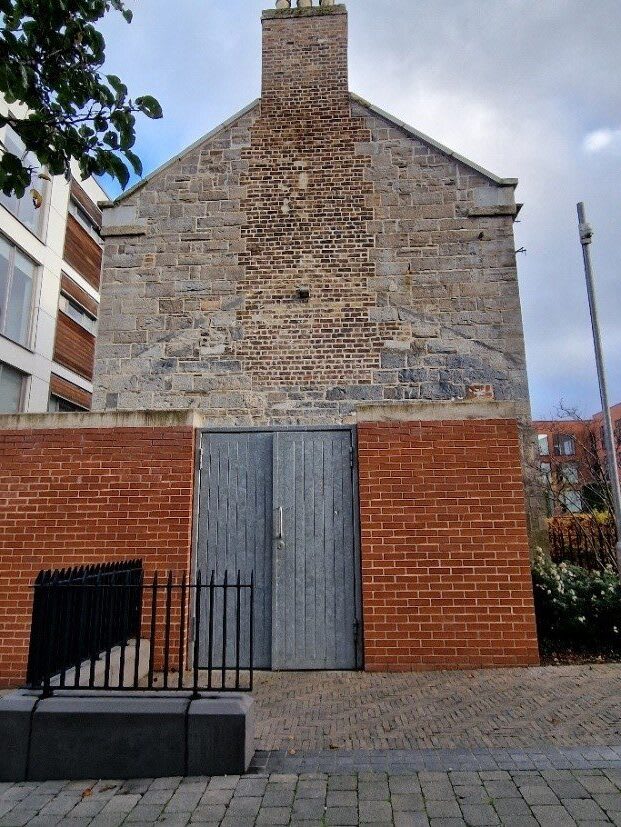
The brick channel in front of the gardens at Tarrant House is also original. It is an open drain for rainwater. It was lifted during the development and later reinstated. Traces of an extension can be seen on the western gable of Tarrant House. This was a later addition and was removed as part of the development.
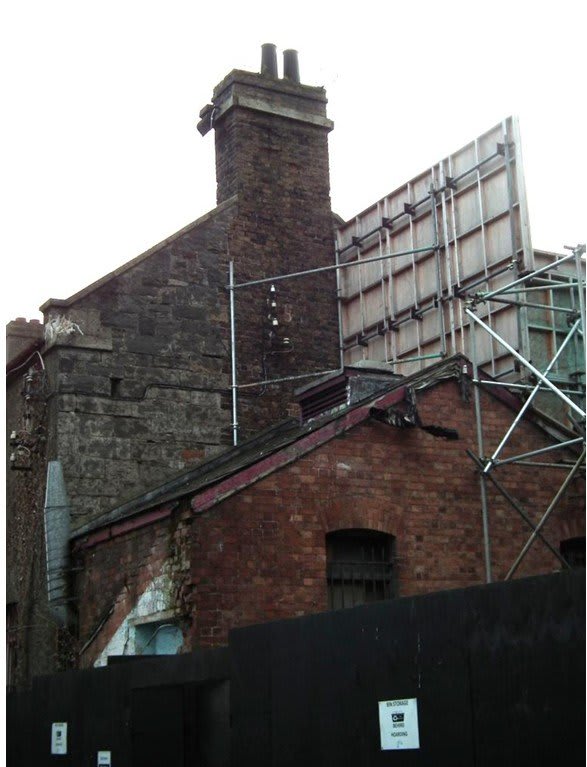
(Image by Alistair Lindsay)
The Irish Defence Forces’ Ordnance Corps and School
Clancy Barracks’ role as a centre of ordnance continued after the Irish National Army took over the barracks in 1922. The Army Ordnance Corps was established as a separate entity in May 1922. It is a critical logistical support for the Defence Forces, procuring and maintaining weapons, ammunition, field and camp equipment, amongst other material for the Forces. Ordnance Corps uniquely has an operational role and since World War II, has provided the Defence Forces and An Garda Síochána with capability in the clearance and disposal of explosives devices found in the State.
The Ordnance School was established in 1942 and housed in a large corrugated iron building to the south of the Officers’ Mess. By the 1980s, it was recognised that the old leaky building was no longer fit for purpose. On 27 February 1991 the new Ordnance School opened, next to Tarrant House. Ireland’s reputation as a centre of ordnance excellence, particularly bomb disposal, is internationally recognised and the school has trained personnel from over 36 different countries. The Ordnance Corps has played an active role in many United Nations and other missions, including to Cyprus, Bosnia, Kosovo, Lebanon, Afghanistan, Iraq, Liberia, Chad, Somalia, Western Sahara, Congo, and many more. In 1998 the Ordnance Corps and school moved to the Curragh.
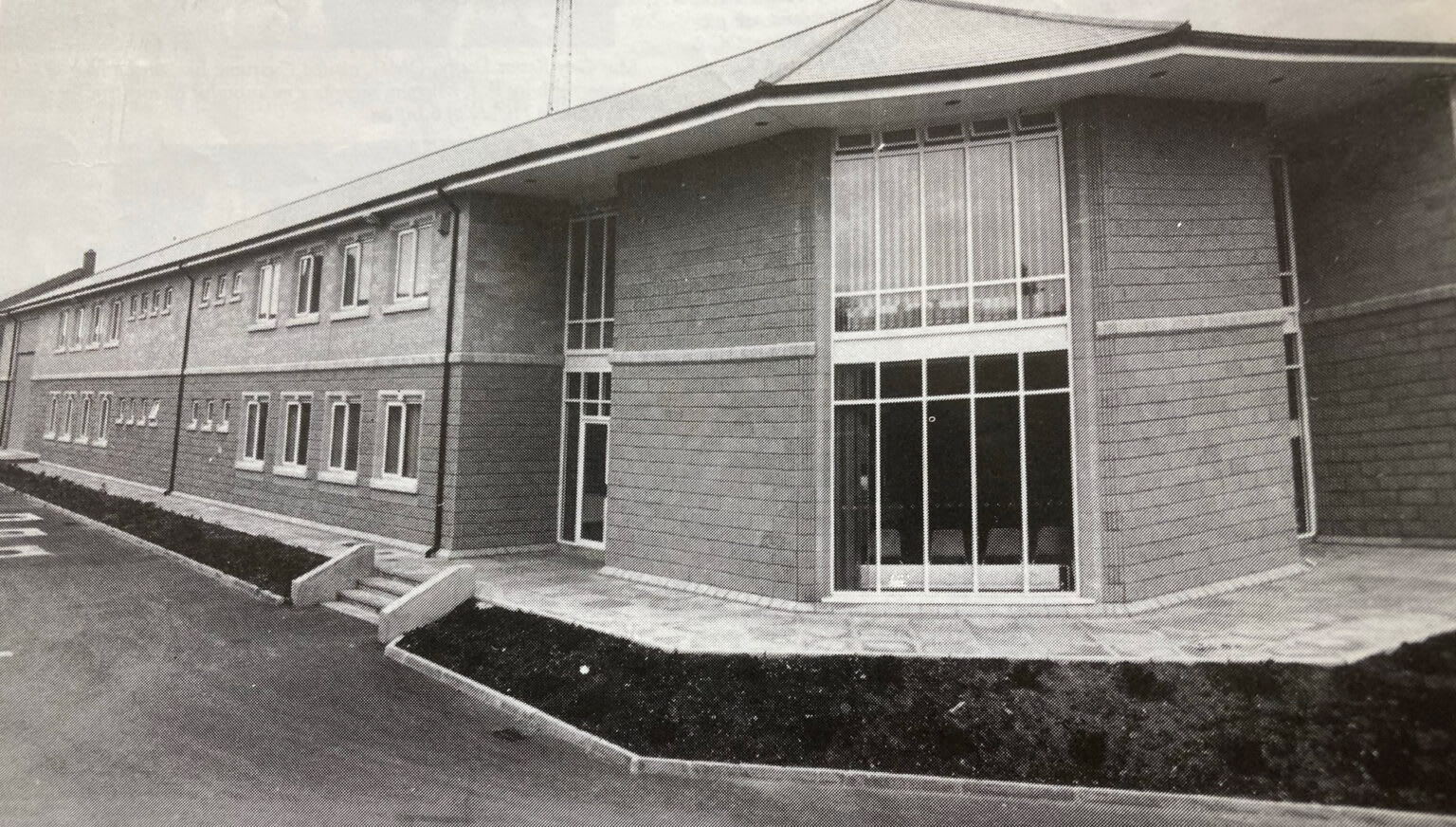
(Image supplied by Lt Col. Ray Lane)
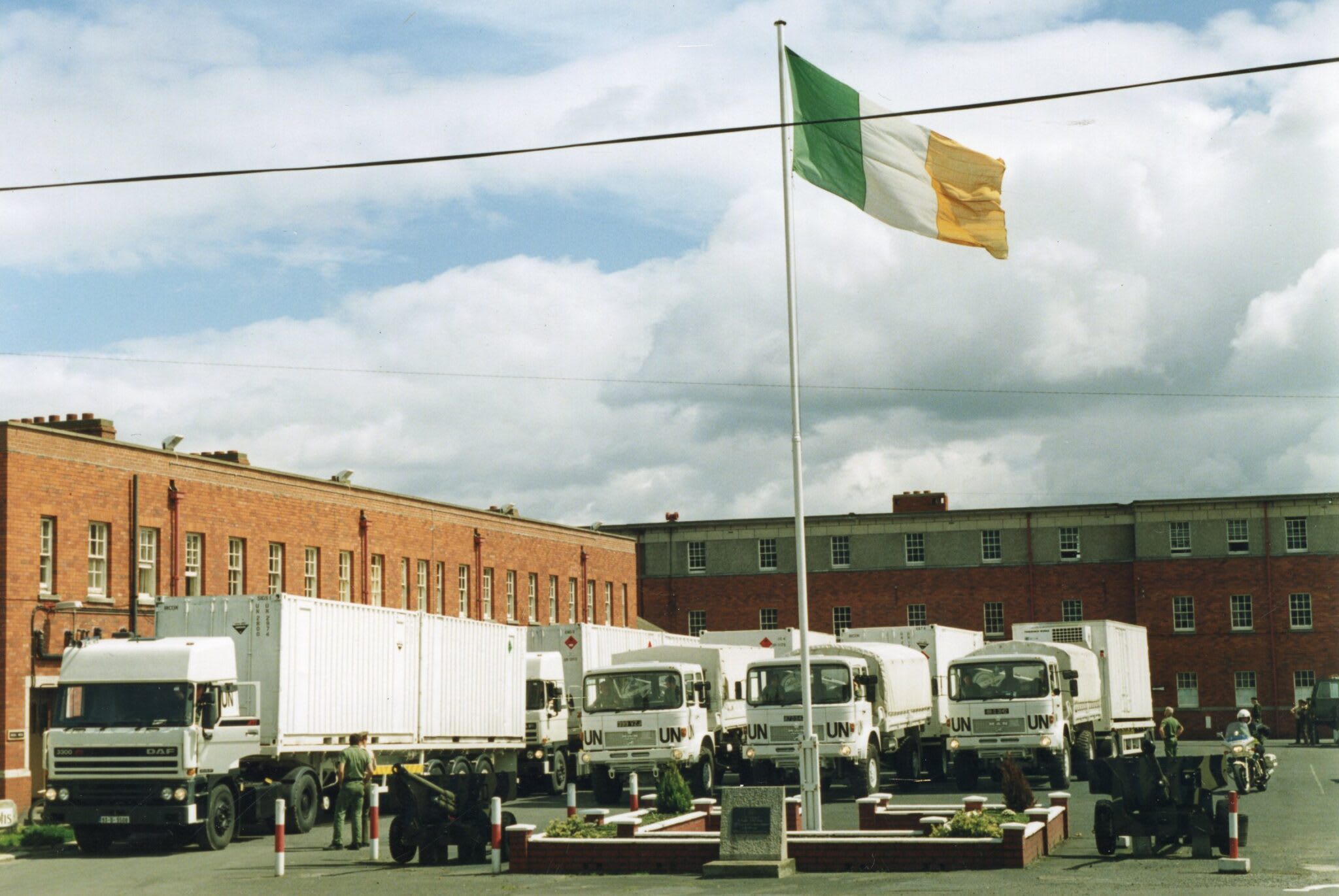
(The Military Archives, Ireland; with thanks to Lt Col. Ray Lane)

Index >
- Stop 1 > The Officers’ Mess
- Stop 2 > The Schoolhouse
- Stop 3 > Colonnade
- Stop 4 > Peadar Clancy
- Stop 5 > Foley House & Laverty House
- Stop 6 > Tarrant House & Cambridge Sq.
- Stop 7 > Dickie Bird
- Stop 8 > Heuston
- Stop 9 > Cobbles
- Stop 10 > The River Liffey
- Stop 11 > Watch Tower
- Stop 12 > Stables, Saddlery, Armoury & Summerhouse
- Stop 13 > Long Lane Royal