
The Officers’ Mess
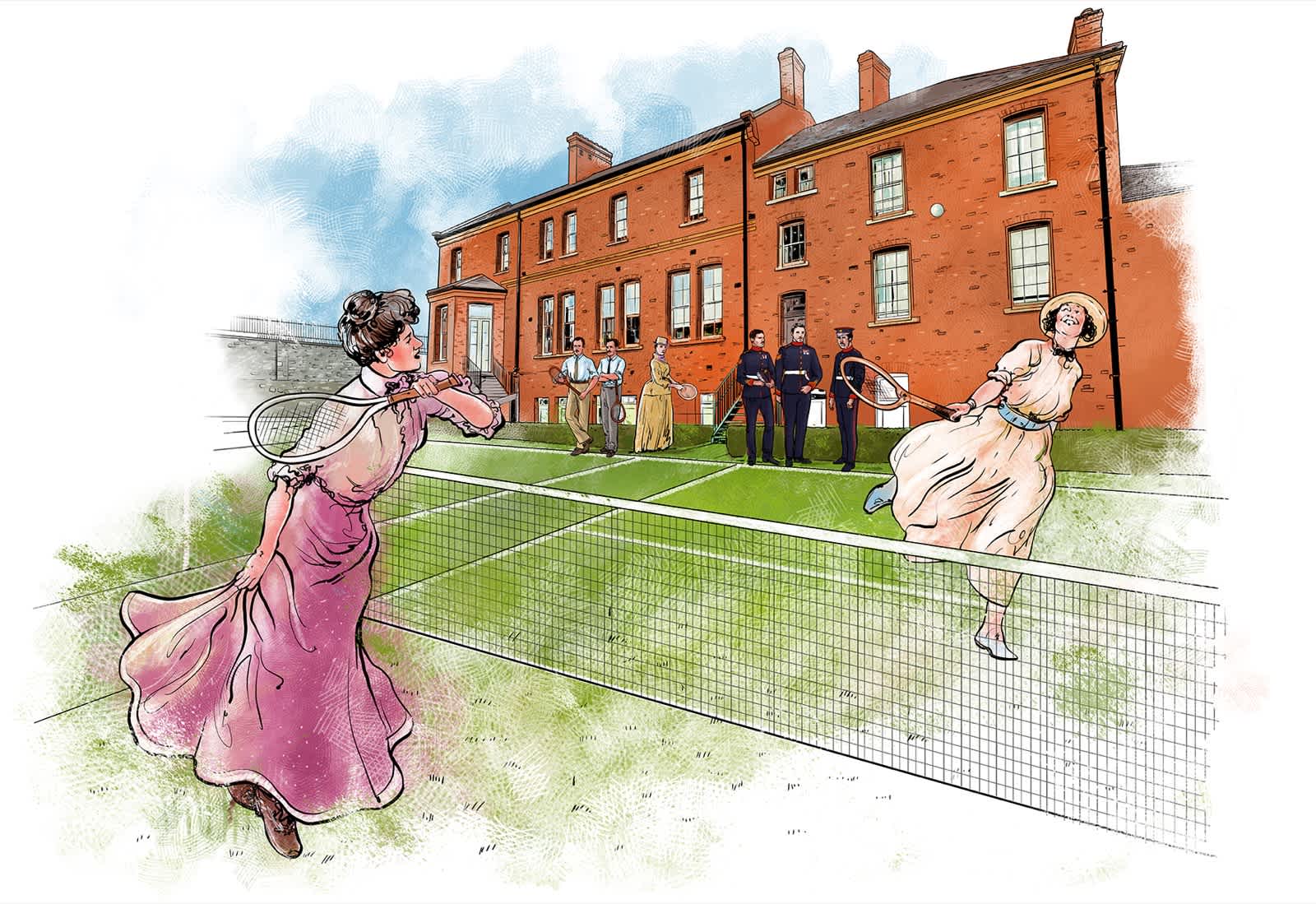
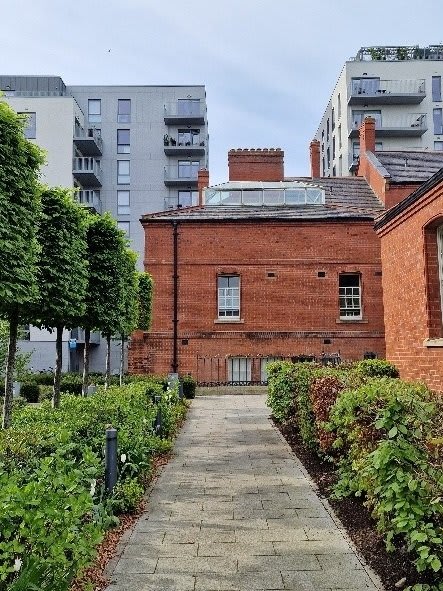
1In the late 1600s a large country house stood near this site. When the military barracks was built in 1797, that house was used as the officers’ mess. It was knocked down and replaced by this red-brick building in 1886-87 as a purpose-built officers’ mess. It was where officers ate and socialised. It had a billiards room with a glass lantern roof light to allow in natural light. The Irish Army also used this building as an officers’ mess, from 1922 until the barracks closed in 2001.
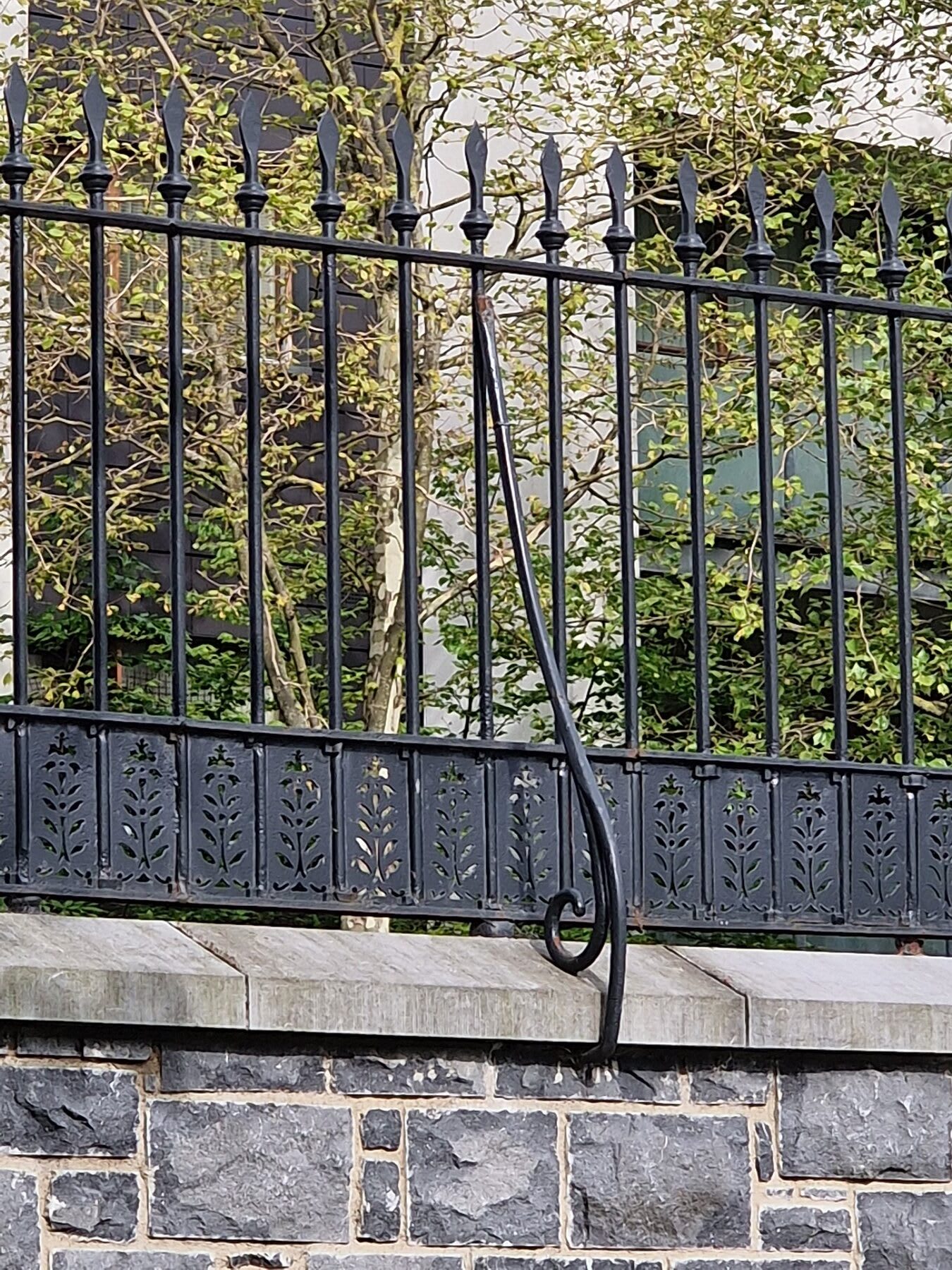
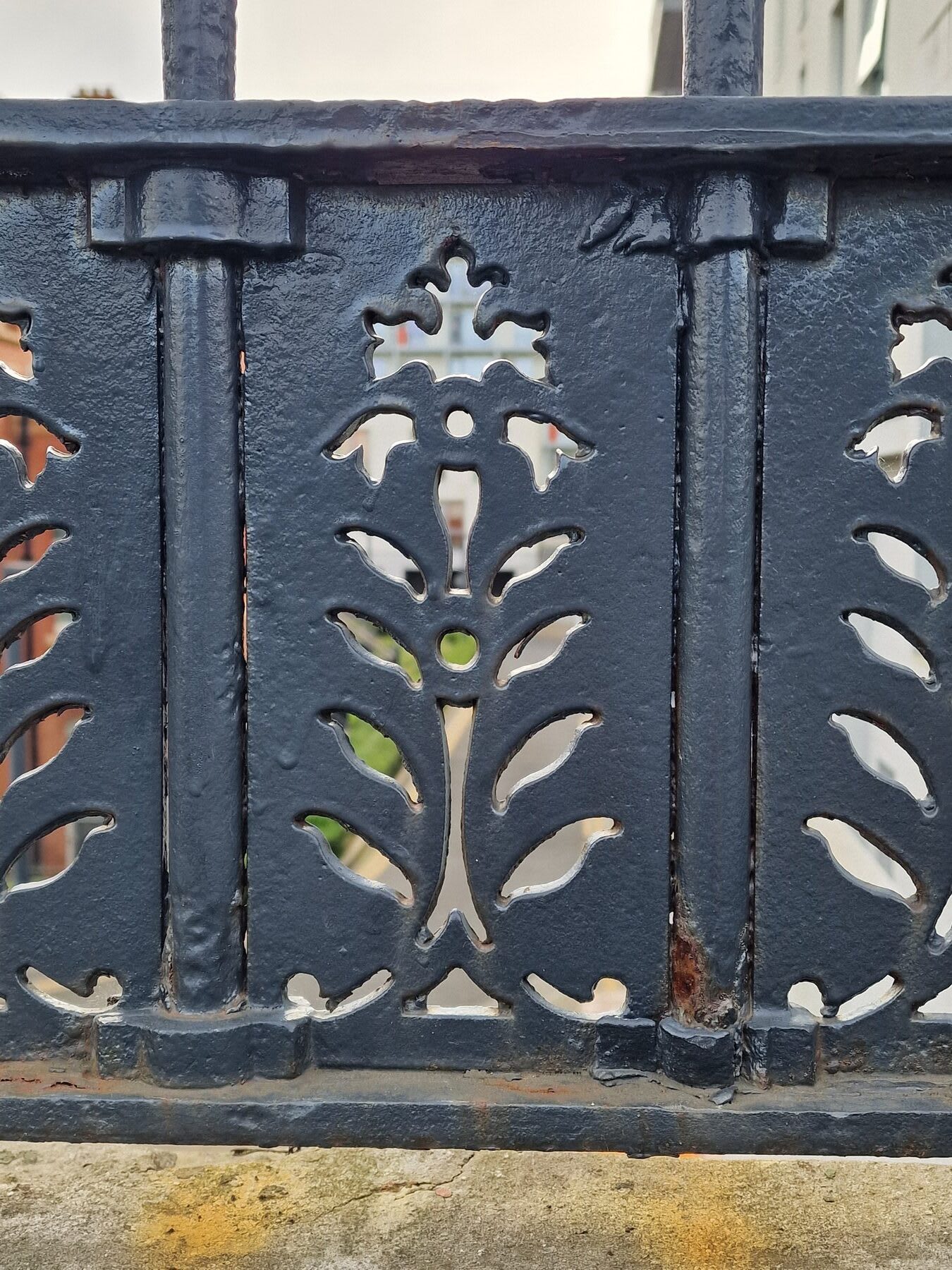
Parade Square and the buildings next to it lie on what was the barracks’ Upper Square. Along the South Circular Road frontage are the remains of the original late 1800s barracks’ wall and railings.
Sir William Robinson’s House
Sir William Robinson (1644-1712) was surveyor general of buildings in Ireland and Master of the Ordnance. An eminent architect, he designed the nearby Royal Hospital Kilmainham. He had a large house built for himself here at Clancy Quay. In 1715 it was described as being supplied with river water via a lead pipe. It had stables, a coach house, brew house, and walled flower and kitchen gardens with fruit trees. In 1797 the house became part of the barracks and was used as the officers’ mess. In the 1880s it was demolished and replaced by this purpose-built officers’ mess. This new building was built of red-brick and was sometimes known as ‘The Red House’.
One of the adjacent modern blocks has been named after Sir William Robinson, to commemorate his contribution to the site.
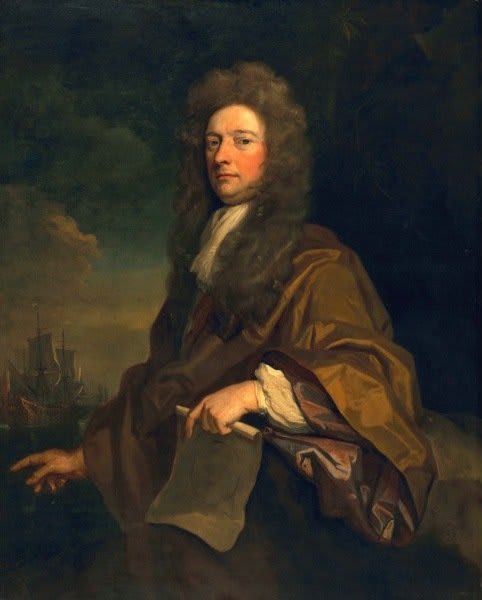
(By Godfrey Kneller – http://emuseum.huntington.org/code/getimage.asp?filename=34-02c2.jpg&type=full&mediatype=Image, Public Domain, https://commons.wikimedia.org/w/index.php?curid=11303655)
The Officers’ Mess
The officers’ mess is where officers eat and socialise; sometimes it is also where unmarried officers sleep. The word mess comes from the Old French word ‘mes’ meaning a portion of food. Typically, an officers’ mess included reading and writing rooms as well as sports facilities, such as a billiards room and adjacent tennis courts.
A large billiards room was installed in the earlier mess building, including a glass lantern roof light in the slate roof to allow natural light in. When the new mess was built in 1887, the billiards room roof, including the glass lantern, was removed and put into the new building. After 1922, the billiards room subsequently became a snooker room and was used right up to the closure of the barracks. The table was moved to another officers’ mess in Dublin. The glass lantern in the roof had been removed in the 1970s, but a replica was installed in the 2000s as part of the present development.
Barracks’ Walls
The stretch of wall running from the main entrance gate, along South Circular Road, next to the Officers’ Mess, is the original barracks’ wall. It dates to the mid to late 1800s. It is lower than the rest of the barracks’ walls and is topped with a decorative iron railing dating to the 1880s.
The Powder Magazine
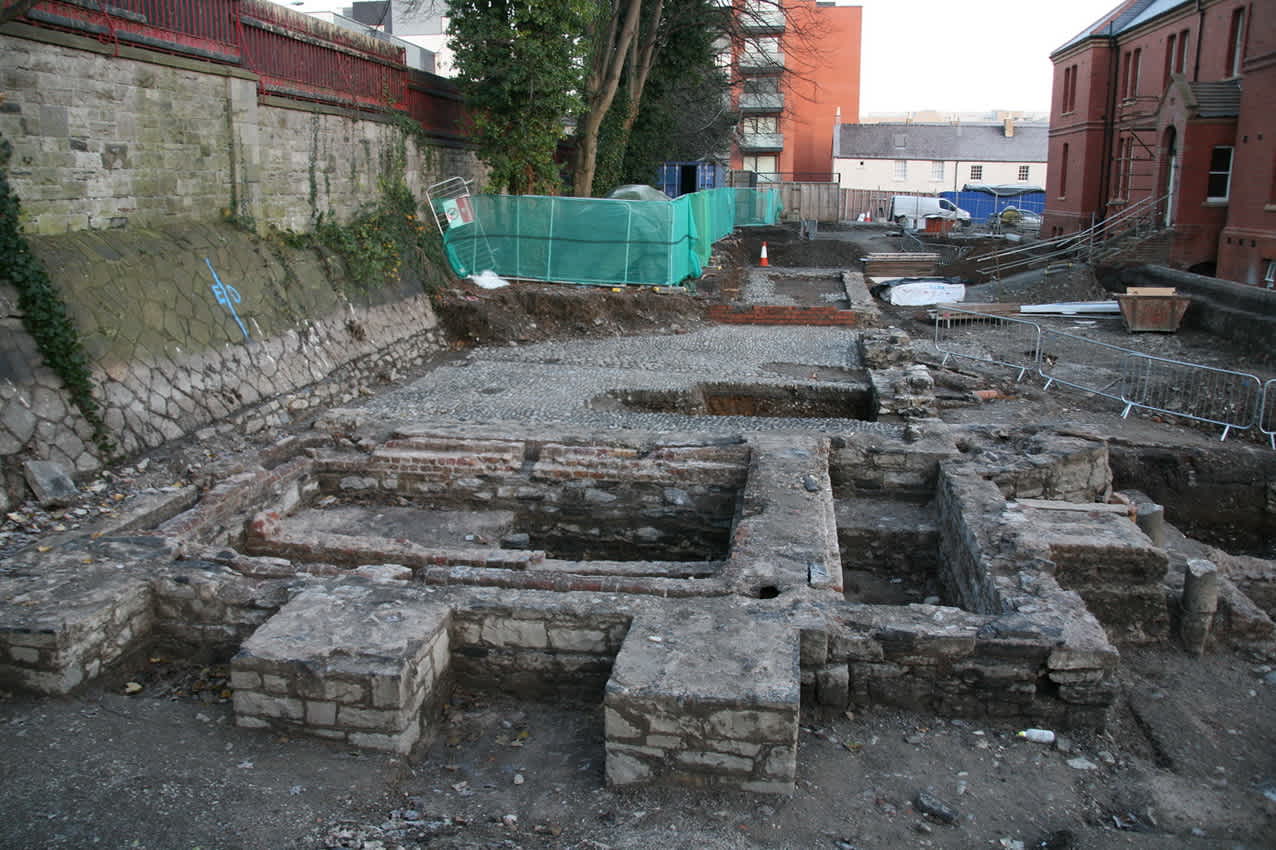
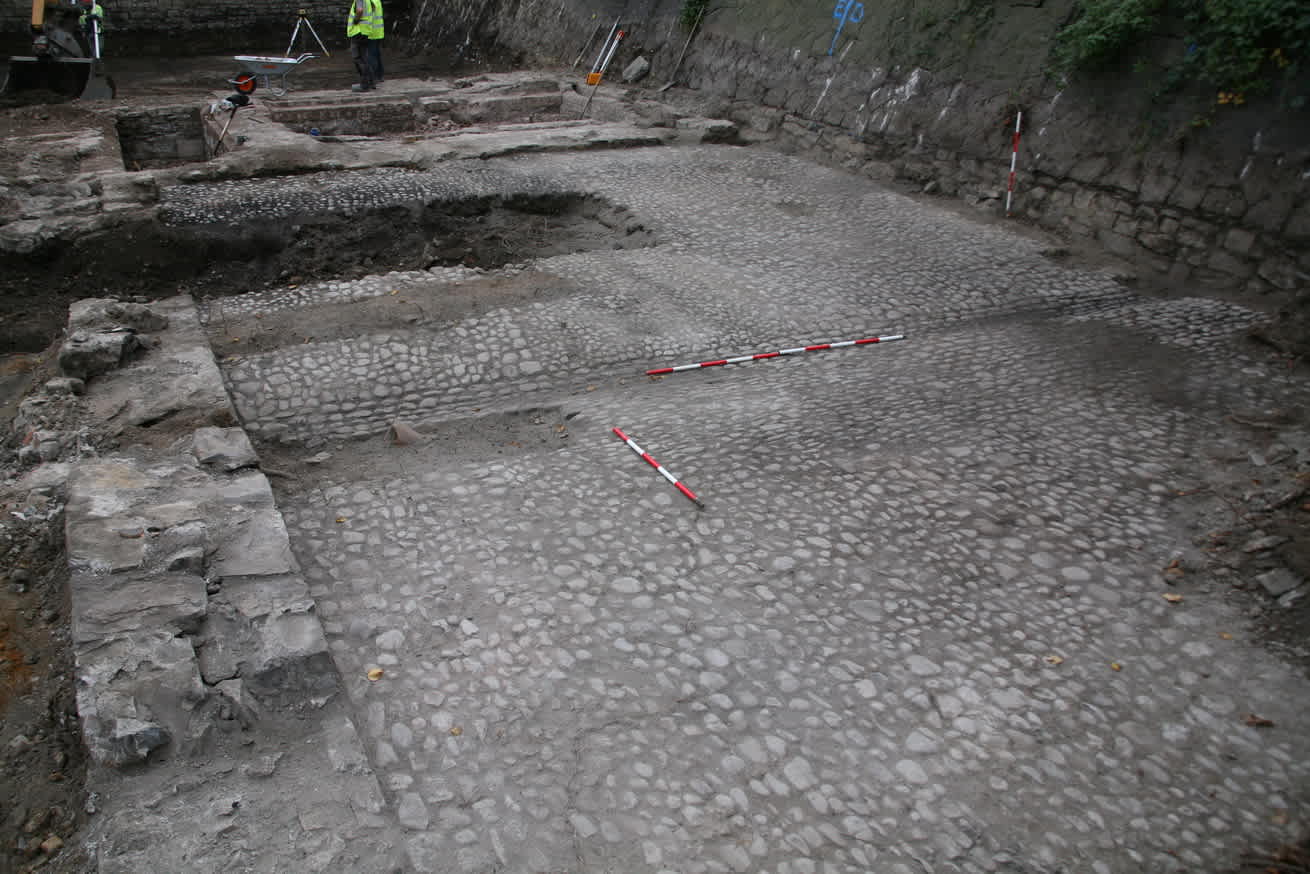
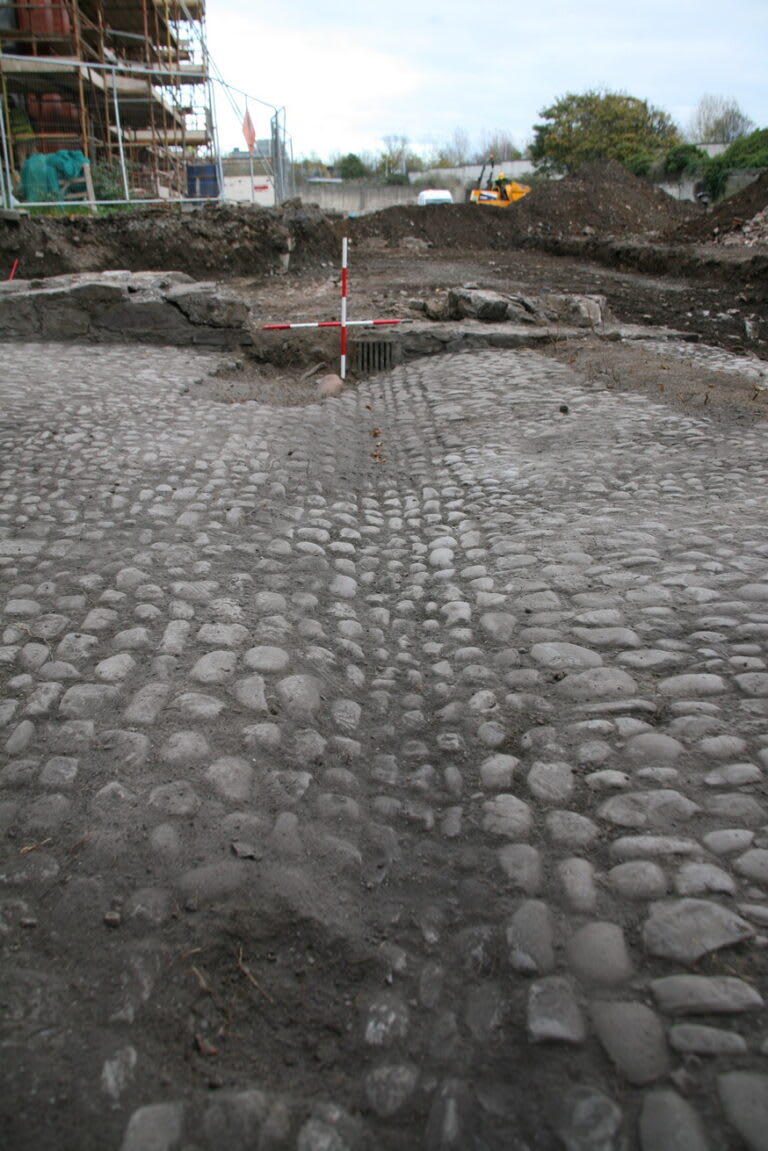
Archaeologists excavated the area to the south and west of the Officers’ Mess in 2017 and 2018, and discovered the remains of a powder magazine and a large cobbled yard. They lay in the south-west corner of the barracks, where the modern building behind the Officers’ Mess now stands.
The magazine was built between 1826 and 1837 for storing gunpowder. It was demolished sometime after 1888. Because of its highly explosive contents, it was constructed with very thick double walls. However, it is thought it was never used for its intended function, in part due to changing technology, but also due to the proximity of the large Magazine Fort just to the north of the River Liffey in Phoenix Park, which has recently been restored.
(© Franc Myles, Archaeology and Built Heritage)
(© Franc Myles, Archaeology and Built Heritage)
Parade Ground/Upper Square
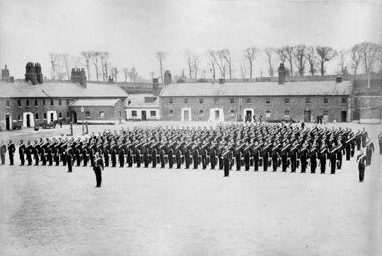
Throughout the life of the barracks, a large parade ground, called Upper Square or Upper Yard, lay to the west of the Officers’ Mess. It was surrounded on all four sides with barrack blocks containing a mix of stabling, accommodation, stores and other uses. Around the time that the Officers’ Mess was rebuilt, the block on that side was removed. At the centre of the yard lay a water pump and underground water tank. These supplied the barracks with fresh water.
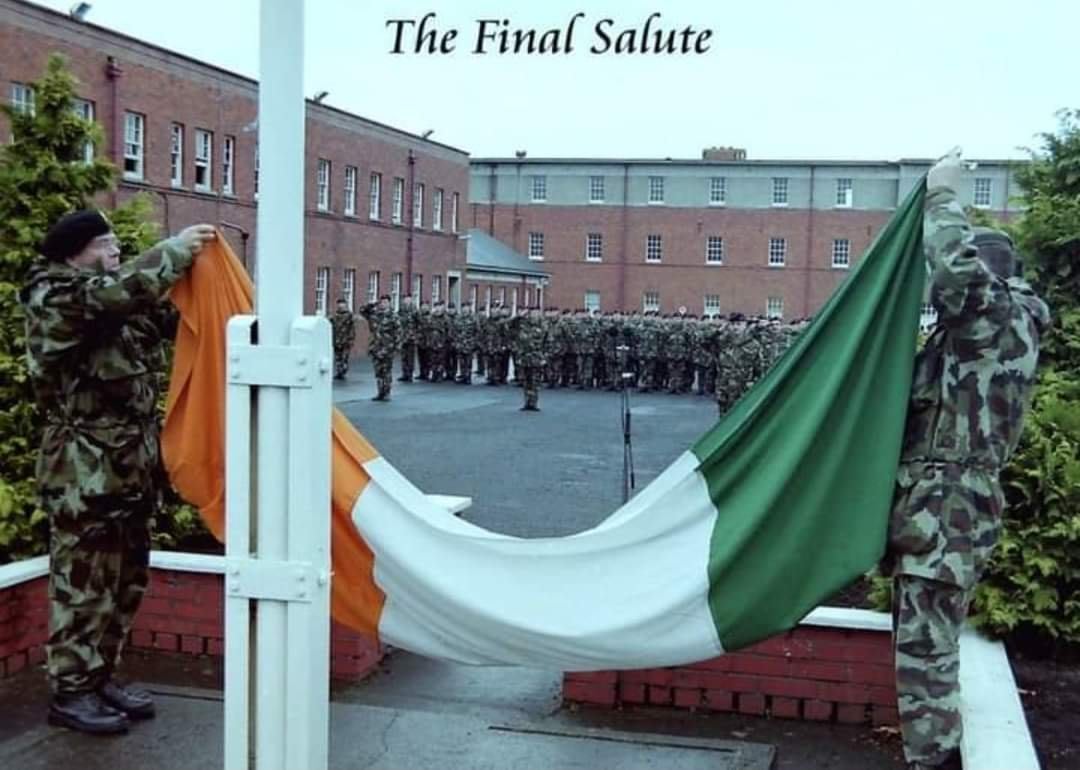
This yard was the site of routine training exercises and official parades. It was the location of the official stand down parade and flag lowering on 18 December 2001, when the barracks closed for good.
(Copyright © 2026 QDG Heritage Trust. Registered Charity No. 273874 (England and Wales))
(Image supplied by Lt Col. Ray Lane)

Index >
- Stop 1 > The Officers’ Mess
- Stop 2 > The Schoolhouse
- Stop 3 > Colonnade
- Stop 4 > Peadar Clancy
- Stop 5 > Foley House & Laverty House
- Stop 6 > Tarrant House & Cambridge Sq.
- Stop 7 > Dickie Bird
- Stop 8 > Heuston
- Stop 9 > Cobbles
- Stop 10 > The River Liffey
- Stop 11 > Watch Tower
- Stop 12 > Stables, Saddlery, Armoury & Summerhouse
- Stop 13 > Long Lane Royal